
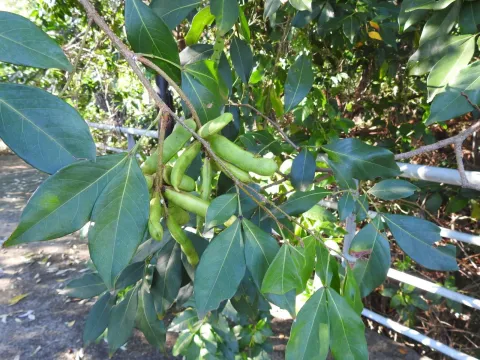
Inga laurina
Inga laurina
Inga laurina, a member of the Fabaceae family, is a medium-sized tropical tree native to the Caribbean and Central and South America, widely recognized for its ecological importance.
What the section contains
Inga laurina
The species thrives in warm, humid tropical environments and cannot tolerate freezing temperatures, making it suitable only for specific tropical climates where it can grow year-round.
As a legume, it forms a symbiotic relationship with nitrogen-fixing bacteria in its root nodules, allowing the tree to improve soil fertility and support the growth of nearby plants.
The tree is remarkably versatile regarding soil types, although it performs best in well-drained loamy soils and shows high tolerance for acidic conditions common in tropical regions.
In terms of agricultural management, it is primarily used in polyculture systems, where its canopy provides shade for shade-grown coffee and cacao plantations.
The tree produces long, flat pods containing edible pulp surrounding the seeds, which is prized in local markets for its pleasant, sweet flavor often compared to honey.
Beyond its fruit, Inga laurina is extensively utilized as a green manure source, as its abundant leaf litter releases significant nitrogen into the soil upon decomposition.
Farmers implement this species to establish windbreaks and erosion-control hedges on hilly terrain, effectively stabilizing the topsoil and preserving farm land.
The wood produced by the tree is occasionally used for small-scale construction or as a sustainable firewood source for local community needs.
Production cycles are relatively stable, with trees reaching maturity for consistent fruit harvesting within approximately 4 to 6 years of establishment.
Fungal diseases affecting the leaves are common, especially in areas with poor ventilation or consistently high rainfall, necessitating strategic pruning practices.
Insect pests, such as larvae of certain moth species and wood-boring beetles, can affect plant vigor, requiring diligent monitoring during the early stages of tree development.
Soil-borne pathogens may lead to root rot if the plantation area is subject to waterlogging, highlighting the importance of site selection and drainage management.
To mitigate the risk of disease spread, it is advised to maintain adequate spacing between trees to ensure that light and airflow reach the inner canopy sections.
Integrated Pest Management (IPM) is the preferred approach, focusing on maintaining tree health through organic soil amendments and minimizing chemical interventions.