
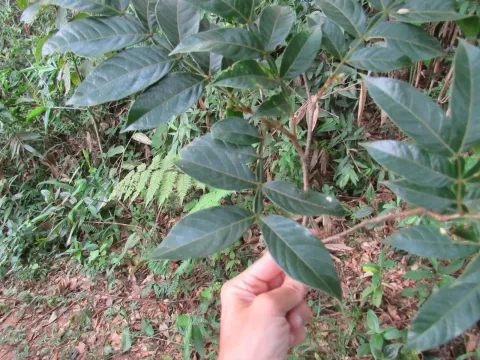
Inga striata
Inga striata
Propagation of Inga striata for industrial or forestry purposes is primarily carried out using seeds. The seeds have low viability during storage, so they must be sown immediately after removal from the pods into prepared nurseries or containers with a nutritious substrate.
What the section contains
Inga striata
The optimal time for sowing is the beginning of the rainy season, which provides young seedlings with sufficient moisture for rooting in the first months of life. In nursery conditions, seeds germinate quickly at high humidity and temperatures above 20-25 degrees Celsius.
Transplanting to a permanent location is carried out when the seedling reaches a height of 30–50 centimeters. It is important to handle with care during transplanting so as not to damage the root system, which is characterized by the presence of symbiotic nodule bacteria that fix nitrogen.
The planting pattern depends on the goals of use: when creating hedges or forest belts, the distance between trees is from 2 to 4 meters. When included in agroforestry systems, Inga is often placed between rows of coffee or cocoa plantations for shading.
Care for young plants in the first year includes regular watering and weed control, which can suppress the growth of slowly developing seedlings. Inga demonstrates intensive growth once the root system has finally adapted to the soil horizon.
Inga striata is a typical representative of tropical flora, requiring consistently high temperatures throughout the year. It does not tolerate sudden cold snaps and does not survive soil freezing, which limits its range to the humid tropical forests of South and Central America.
The crop prefers deep, well-drained soils, but has high ecological plasticity and can grow on poor, acidic tropical soils. Due to symbiosis with nitrogen-fixing bacteria, Inga itself enriches the soil with nitrogen, making it a valuable species for restoring degraded lands.
The plant needs a high level of rainfall distributed throughout the year, although adult specimens can withstand short dry periods. An important requirement is protection from strong winds, which can damage brittle branches and reduce the efficiency of photosynthesis.
For optimal development, Inga striata needs diffused light at a young age, but as the tree matures, it requires full sunlight for active fruit production. As part of agroforestry systems, it performs the function of a "nurse tree," creating a favorable microclimate for shade-loving crops.
Agrotechnics also include periodic pruning, which not only regulates the crown shape but also provides a significant amount of organic biomass for mulching the soil under other agricultural plants.
The yield of Inga striata is evaluated not only by the quantity of edible fruit but also by the volume of organic matter obtained. The fruits are long pods inside which there is a white pulp that has a pleasant sweet taste reminiscent of vanilla ice cream.
The tree begins to bear fruit 3–5 years after planting in a permanent place, depending on the intensity of care and the climatic conditions of the region. Peak yields occur at 8–12 years, after which the indicators may gradually decline.
An important component of productivity is the annual biomass growth, which farmers use as "green manure." Regular pruning of branches allows for harvesting several tons of biomass per hectare annually, which significantly saves costs on applying mineral fertilizers.
Fruits are harvested manually as they ripen, focusing on the change in color of the pod shell. It is important to harvest in a timely manner, as overripe fruits spoil quickly or become prey to insects and rodents.
The economic use of the harvest includes consumption in fresh form, as well as use as an important element of sustainable agriculture, where the tree acts as a soil fertility stabilizer and a supplier of feed additives.
Like most species of the genus Inga, this object is susceptible to attack by specific pests typical of tropical legumes. The greatest damage is caused by the larvae of various types of moths, which can damage both young leaves and developing pods.
Fungal diseases, such as anthracnose, can occur with high humidity and poor air circulation inside the crown. This leads to premature leaf fall and a decrease in the overall vitality of the plant.
Mealybugs and scale insects often settle on young shoots, sucking juices and creating conditions for the development of sooty mold. Controlling them requires regular inspection of plantations and the use of biological control methods.
Root rot can occur with water stagnation in the root zone, especially on heavy clay soils with poor drainage. Prevention consists of choosing the right planting site and ensuring aeration of the root system.
Weeds are a serious threat only at the stage of seedling establishment. Subsequently, due to rapid growth and the creation of dense shade, Inga striata successfully suppresses most competitors around the trunk.