
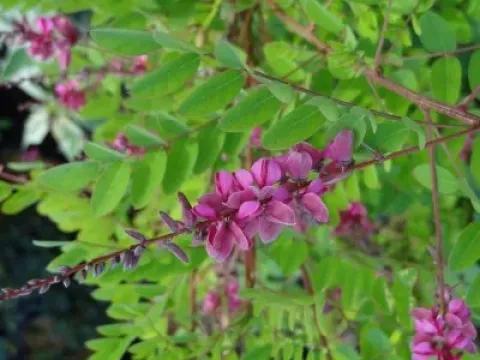
Indigofera howellii
Indigofera howellii
Indigofera howellii is an elegant perennial deciduous shrub belonging to the large Fabaceae family. This species is a valuable representative of the genus that naturally grows in the mountainous regions of East Asia, predominantly in China.
What the section contains
Indigofera howellii
The plant has moderate requirements for climatic conditions, preferring regions with a mild climate. It can withstand short-term frosts, but in harsh winter conditions, it requires reliable protection or cultivation as a container plant.
For successful growth, the crop needs well-drained, fertile soils with a neutral or slightly acidic reaction. It is important to avoid areas with stagnant moisture, as the root system of this shrub is extremely sensitive to waterlogging and is at risk of rotting.
The shrub prefers open, sunny locations protected from strong winds and drafts. In partial shade, the plant's development slows down, and flowering becomes less abundant, which reduces the overall aesthetic value of the plantings.
Primary agronomic attention should be paid to regular but moderate watering during dry periods. Organic fertilizers applied in the spring to stimulate active shoot growth and subsequent high-quality flowering are also beneficial for the plant.
Indigofera howellii possesses quite high resistance to specific diseases, however, if the watering regime is disrupted, it is prone to the development of root rots.
Among the pests, aphids and spider mites represent the greatest danger in closed and open ground, as they can infest young leaves and inflorescences.
To prevent the spread of pests, it is recommended to conduct regular inspections of the bushes during the active growing season and use biological preparations at the first signs of infestation.
Maintaining a planting distance between neighboring specimens ensures better air circulation, which minimizes the risk of fungal infection development in dense plantings.
To maintain the plant's health, it is important to perform sanitary pruning of damaged and weak branches, which stimulates bush renewal and general resistance to pathogens.