
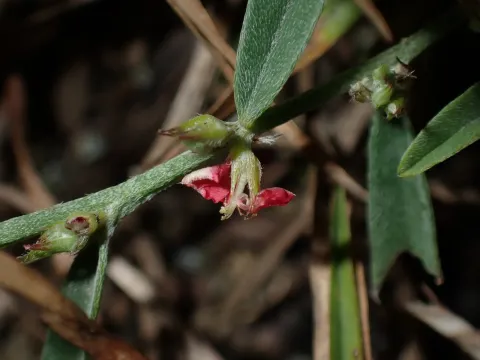
Indigofera linifolia
Indigofera linifolia
Indigofera linifolia is a hardy herbaceous legume species that serves as an important component in grassland and pasture restoration projects worldwide.
What the section contains
Indigofera linifolia
Sowing should be performed when soil temperatures are warm and stable, ensuring that the seeds have the necessary thermal energy to initiate uniform germination across the field.
Seedbed preparation is vital; the soil should be fine and firm to allow consistent seed-to-soil contact, which prevents the seeds from drying out during the critical germination phase.
Depending on the intended use, such as erosion control or forage production, seed density varies significantly to achieve either a dense ground cover or high biomass yield.
In many regions, sowing coincides with the onset of seasonal rainfall, which provides the necessary moisture for the rapid initial establishment of the root systems.
This species is highly drought-tolerant and thrives in a variety of soil conditions, particularly in sandy and nutrient-poor soils where other crops might struggle to survive.
Indigofera linifolia requires full sunlight exposure; it does not perform well in shaded areas, as reduced light levels significantly hinder its growth rate and total biomass accumulation.
As a nitrogen-fixing legume, it establishes a symbiotic relationship with soil bacteria, which reduces the need for synthetic nitrogen fertilizers and contributes to long-term soil health.
The plant is sensitive to waterlogging and poor drainage; therefore, selecting well-drained terrain is essential to prevent root rot and ensure optimal physiological development.
Temperature tolerance is a hallmark of this plant, allowing it to remain productive under extreme heat conditions typical of arid and semi-arid environments.
The biomass yield of Indigofera linifolia is highly dependent on local moisture levels and soil nutrient availability, with yields generally ranging from 5 to 15 tons per hectare.
Frequent cutting can encourage lateral branching and increase the total seasonal harvest, making it a reliable resource for livestock feed and green manure applications.
Harvesting at the correct phenological stage is crucial to ensure the highest nutritional quality, as protein content decreases significantly as the stems become woody.
Seed production is consistent, and keeping specific plots for seed multiplication ensures a sustainable supply for consecutive planting cycles without needing external inputs.
Proper pasture management, including rotation, allows this species to persist over several years, providing continuous ground cover and soil protection.
Indigofera linifolia exhibits natural resistance to many common agricultural pests, which significantly lowers the risk of large-scale crop failure.
During the early seedling stage, some insect species may feed on the tender foliage, but plants usually recover once the root system is well-established.
Fungal diseases like powdery mildew are rare but can occur under conditions of extremely high humidity and poor airflow, necessitating appropriate spacing in dense stands.
Root diseases are primarily linked to water stagnation; maintaining proper field drainage is the most effective cultural method to protect the health of the plants.
Because of its robust nature, the plant requires very little chemical intervention, making it an ideal candidate for low-input and environmentally friendly farming systems.