
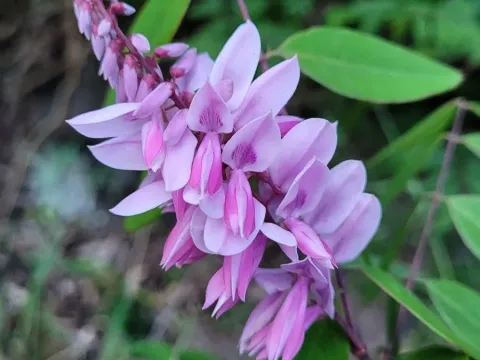
Indigofera incarnata
Indigofera incarnata
Indigofera incarnata is a perennial subshrub belonging to the Fabaceae family. Native to East Asia, including China and Japan, it is highly regarded for its adaptability and ability to thrive in diverse environmental conditions while enriching the soil with nitrogen.
What the section contains
Indigofera incarnata
The plant thrives in well-drained sandy or loamy soils with a neutral to slightly acidic pH. Its deep root system provides excellent drought tolerance, making it a reliable choice for areas with irregular rainfall patterns or poor soil quality.
Optimal growth requires full sun exposure, as shaded conditions significantly reduce the vigor and flowering potential of the plant. In temperate regions, it is advisable to protect the root zone with mulch during winter to ensure successful regrowth in the following spring.
Agrotechnical management primarily involves weed control during the establishment phase. Once the plant has developed a sufficient canopy, it acts as an effective ground cover, naturally suppressing weeds and reducing the need for manual maintenance or herbicides.
Economically, Indigofera incarnata is used for ornamental purposes, erosion control, and soil restoration. Its ability to fix atmospheric nitrogen makes it an excellent candidate for sustainable agriculture and land management projects where soil fertility improvement is required.
Root rot is the most common concern for Indigofera incarnata, typically caused by waterlogged soil conditions. Proper site selection and soil amendment with organic matter or grit can improve drainage and mitigate the risk of fungal infections in the root zone.
Pests such as spider mites and aphids may occasionally infest the foliage, particularly during hot and dry spells. Integrated pest management, focusing on biological controls and regular monitoring, is usually sufficient to maintain plant health without relying on heavy chemicals.
Leaf spot diseases can manifest in areas with high humidity and poor air circulation. To prevent these, it is recommended to prune crowded plants regularly, ensuring sunlight and air reach all parts of the shrub to maintain dry conditions around the stems.
Mineral deficiencies, particularly of iron or magnesium, can sometimes affect leaf color and plant growth rate. Foliar application of micro-nutrients can correct these issues, ensuring the plant maintains a healthy metabolism and strong resistance to external stresses.
Regular monitoring of plant health allows for the early detection of any physiological or pathological issues. With balanced care and attention to the soil environment, Indigofera incarnata remains a resilient and long-lasting perennial that requires minimal intervention.