
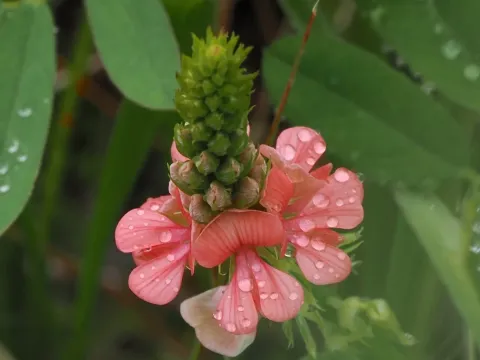
Indigofera hendecaphylla
Indigofera hendecaphylla
Indigofera hendecaphylla is typically sown at the beginning of the rainy season when soil temperatures are high enough to support rapid germination. In tropical climates, planting is usually carried out between May and June to ensure adequate soil moisture for the initial development phase.
What the section contains
Indigofera hendecaphylla
Seeds have a hard coat, so mechanical or chemical scarification is recommended to improve germination rates significantly. The seeds should be sown at a shallow depth of 1-2 centimeters to ensure they have enough energy to emerge without drying out.
Sowing density depends on the intended use; for erosion control and soil cover, a higher seed rate is preferred. Rows should be spaced 30 to 40 centimeters apart to provide sufficient light and space for the plants to establish a dense canopy.
During the first few weeks, the plants grow slowly and require vigilant weed control to prevent competition. Once the canopy is established, the plant becomes aggressive and naturally suppresses weed populations effectively.
The species demonstrates excellent regrowth potential after mowing, allowing the field to remain productive for several years without the need for frequent plowing or reseeding.
As a member of the Fabaceae family, this perennial herb is highly adaptable to various soil types. It thrives best in well-drained loamy soils but remains productive even in less fertile or acidic conditions.
The plant is native to tropical regions and requires a climate with consistent rainfall. While it is quite hardy, it does not tolerate waterlogging, so it is essential to avoid sites with poor drainage where root rot could occur.
Indigofera hendecaphylla performs optimally in soils with a pH ranging from 5.5 to 7.0. Its high tolerance to acidic conditions makes it an excellent choice for improving degraded tropical lands where other crops may struggle.
This legume is highly valued for its nitrogen-fixing capabilities, which occur through a symbiotic relationship with soil bacteria. This process enhances soil fertility and reduces the need for synthetic nitrogen fertilizers.
The crop is shade-tolerant, making it an ideal choice for intercropping or as a ground cover beneath permanent plantations, such as rubber or coffee, where it helps maintain soil moisture and fertility.
The yield of green biomass depends heavily on soil quality and the frequency of rainfall. In optimal conditions, it forms a thick mat that serves as an excellent deterrent against soil erosion.
When used as a forage crop, it provides multiple cuts throughout the growing season. The biomass is rich in protein, providing a high-quality nutritional supplement for livestock feeding programs.
Depending on the environment and management, annual biomass yields can reach 15-25 tons per hectare on a fresh-weight basis. These figures are influenced significantly by the cutting intervals and the overall health of the pasture.
The plant's contribution to nitrogen accumulation in the soil provides a substantial benefit to subsequent crops in a rotation, improving overall field productivity and economic outcomes for farmers.
Managing the seed production cycle is vital for sustaining long-term yields. Proper harvest and storage of seeds ensure consistent plant density and the vigor of the stands over many seasons.
The most significant threat to this crop comes from leaf-eating insects, which can quickly reduce the leaf surface area, thereby impeding photosynthesis and reducing biomass production.
Pests such as various butterfly larvae and weevils target the terminal buds and young shoots. These populations can multiply rapidly if a large-scale monoculture approach is used, making pest monitoring essential.
Fungal diseases, including powdery mildew and leaf spot, are prevalent in high-humidity conditions where air circulation is restricted. Keeping the stand well-managed helps prevent these pathogens from spreading.
Integrated pest management strategies, including the use of trap crops and beneficial insects, are recommended to maintain balance in the agroecosystem without relying solely on chemical intervention.
Chemical control should be used sparingly because the plant can potentially sequester certain toxins, which poses a risk to livestock if the foliage is intended for grazing or fodder.