
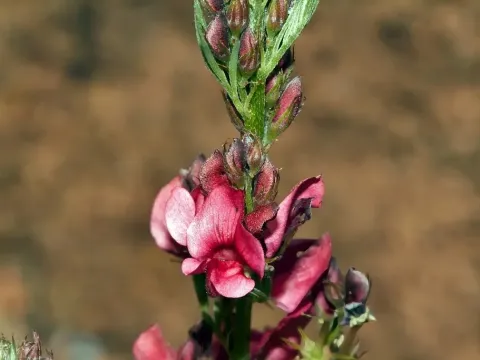
Indigofera hilaris
Indigofera hilaris
Sowing Indigofera hilaris is best conducted during the spring when soil temperatures consistently exceed 15 degrees Celsius. Ensuring sufficient soil moisture is vital for successful germination and early development, especially in arid or semi-arid climates.
What the section contains
Indigofera hilaris
A row-planting method is generally recommended to ensure even spacing and facilitate future mechanical care of the crops. Seeds should be sown at a depth of 2–3 centimeters, providing optimal contact with the soil while allowing sufficient space for root establishment.
Field preparation requires thorough weeding and soil aeration before planting. Since this legume develops slowly during the initial vegetative phase, it is crucial to provide a weed-free environment to prevent competition for nutrients and sunlight.
Crop rotation practices should be strictly followed to minimize soil-borne pathogens. Indigofera should ideally be planted in rotation with non-leguminous crops to optimize soil nutrient levels and maintain high fertility standards throughout the cycle.
Adjusting sowing density according to local climate conditions can significantly influence productivity. In drier regions, slightly lower densities are often preferred to reduce stress caused by limited water availability during the peak growth season.
Indigofera hilaris is a member of the Fabaceae family and thrives in tropical and subtropical environments. It requires significant solar radiation and is highly tolerant to heat, making it suitable for open, sun-exposed agricultural fields.
The crop prefers well-drained loamy or sandy soils with a neutral pH. It is highly sensitive to waterlogging, so fields must be properly graded to avoid standing water, which can lead to root system decay and poor plant growth.
This species displays impressive drought resistance, allowing it to withstand moderate periods of water scarcity. However, consistent and regulated moisture during the active growth stages will lead to significantly higher biomass yields.
Optimal growth occurs at temperatures ranging between 20 and 30 degrees Celsius. While the plant can handle some temperature fluctuations, exposure to sharp frosts can damage tender stems and significantly set back the vegetation cycle.
Soil maintenance, including mechanical inter-row cultivation, helps improve oxygen levels and nutrient uptake. Regular care ensures that the nitrogen-fixing properties of the plant are maximized, reducing the need for intensive synthetic fertilization.
The yield of Indigofera hilaris depends heavily on climatic conditions and consistent agricultural management. It is capable of rapid regrowth after harvesting, allowing for multiple cuts in a single season under ideal moisture and temperature conditions.
Peak biomass production usually occurs during the second and third years of cultivation. As the perennial root system expands, the plant becomes more resilient and efficient at accumulating green matter, which is highly valued for forage or organic soil enrichment.
The quality of the harvested biomass is determined by the timing of the cut. Monitoring the plant's development stages is essential to ensure that protein levels are at their maximum before the crop reaches the stage of advanced lignification.
Proper field management and strategic density of planting help achieve maximum yield consistency. Large-scale farming equipment is compatible with standard row patterns, allowing for efficient harvesting and reduction in operational costs.
Regular monitoring of field health ensures that nutrient levels remain adequate for high production. When managed correctly, this legume contributes significantly to the overall productivity of the farmland, especially in sustainable agricultural systems.
Fungal diseases, such as powdery mildew and various root rots, are the primary threats to Indigofera hilaris, particularly in high-humidity or poorly drained soils. Improving airflow between plants is a crucial preventive measure.
Pests like aphids and certain beetle species can cause significant damage to foliage and developing shoots. Monitoring programs are essential to detect infestations early and implement targeted control measures to minimize crop damage.
Weed management is vital during the early vegetative stage. Competition for water and light from aggressive weed species can severely stunt the growth of young plants, making early intervention through mechanical or biological control necessary.
Poor crop rotation can lead to the build-up of specific soil pathogens. Farmers are encouraged to follow science-based rotation cycles and utilize certified, healthy seed stocks to prevent the transmission of diseases from one season to the next.
Integrated Pest Management (IPM) strategies, which prioritize biological solutions over heavy chemical use, are highly recommended. This approach ensures the sustainability of the crop and the long-term health of the agricultural land.
Harvesting for green biomass is best performed at the bud-burst or early flowering stage. At this point, the plant contains the optimal balance of nutrients and fiber, making it highly effective for animal feed or green manure applications.
Cutting should be performed at a height of 5–10 centimeters above the ground to preserve the crown and allow for healthy regrowth. This practice ensures that the crop maintains its productivity over multiple harvests within the growing season.
Post-harvest management involves rapid drying or immediate processing of the green material. Effective drying techniques are crucial to prevent mold and nutrient loss, ensuring that the final product remains stable and nutritionally dense.
Seed harvesting requires the use of specialized machinery calibrated to avoid damaging the seed coats. Precision in the threshing process is essential to maintain the germination energy of the seeds for future planting cycles.
Stored seeds must be kept in a cool, dry environment with controlled humidity. Proper storage conditions ensure that the seeds remain viable and free from insect or fungal contamination until they are required for the next sowing period.