
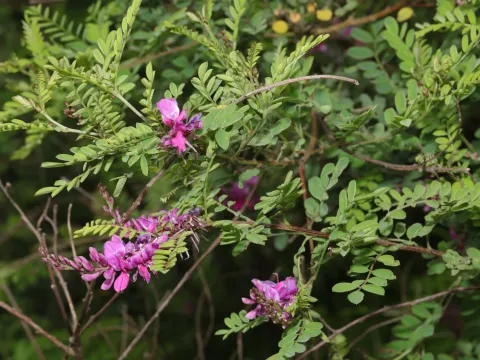
Indigofera heterantha
Indigofera heterantha
Indigofera heterantha, commonly known as Himalayan indigo, is a perennial shrub belonging to the Fabaceae family. It is recognized for its ability to fix atmospheric nitrogen, contributing significantly to soil enrichment in agroforestry systems.
What the section contains
Indigofera heterantha
Native to the Himalayan regions, this species is well-adapted to mountainous landscapes and rocky slopes. It thrives in environments where other crops might struggle due to limited resources or poor soil quality.
The plant requires well-drained soils and thrives in locations with full sunlight. It is sensitive to waterlogged conditions, which can lead to root rot; therefore, selecting sites with proper drainage is essential for successful establishment.
Climatic requirements focus on warm growing seasons. While it displays moderate frost tolerance, established plants can withstand colder temperatures, though severe winter conditions may lead to dieback of the above-ground branches.
Agronomic maintenance includes periodic soil cultivation to ensure aeration during the early stages of development. Once established, the shrub becomes highly drought-tolerant, requiring minimal supplemental irrigation even in arid regions.
The agricultural utility of Indigofera heterantha is extensive. It is primarily valued as a forage crop, providing high-protein foliage that can serve as a supplemental nutrient source for livestock.
The shrub is highly esteemed in apiculture as a nectar source. Its ability to bloom during warmer months when other forage sources are scarce makes it a critical component for maintaining bee health and honey production.
As a soil stabilizer, the plant's extensive root system makes it an excellent choice for erosion control. Planting it on hillsides or terraced landscapes significantly reduces soil loss and enhances stability.
In addition to agricultural benefits, the plant is historically significant for its use in dye production. While the yield of indigo dye is lower compared to other Indigofera species, it remains an option for organic dye cultivation.
Harvesting seeds requires careful monitoring of the pods. Because flowering and ripening occur over a prolonged period, multiple harvest cycles may be necessary to ensure maximum seed yield for future propagation.
The plant is relatively resistant to pests and diseases, though high humidity levels can predispose it to fungal issues such as powdery mildew, particularly when plant density is too high.
Common legume pests, including aphids and various weevils, may infest the foliage and reproductive structures. Monitoring these pests during the peak growing season is crucial for maintaining plant vigor.
Integrated pest management (IPM) strategies are highly recommended. Utilizing biological controls is preferred to protect pollinator populations, which are attracted to the plant's nectar-rich flowers.
Weed management is vital during the first one to two years of growth. The shrub's slow initial growth rate makes it vulnerable to competition from invasive grasses, necessitating regular manual or mechanical weeding.
Maintaining a balanced ecosystem and avoiding chemical drift from nearby conventional crops helps ensure the longevity of an Indigofera heterantha plantation.