
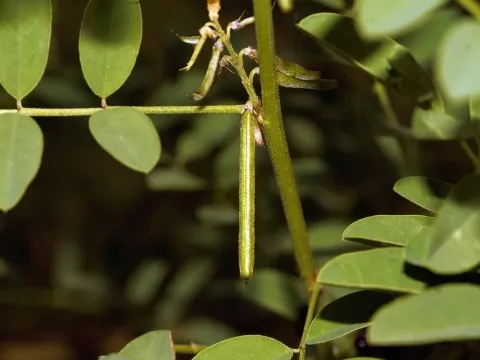
Indigofera arrecta
Indigofera arrecta
Indigofera arrecta is a perennial shrub belonging to the Fabaceae family, widely recognized for its historical and commercial importance as a source of high-quality natural indigo dye. It originates from the tropical regions of Africa, where it thrives in humid and warm climates.
What the section contains
Indigofera arrecta
The crop demands a tropical or subtropical climate with full sun exposure and warm temperatures. While it is adaptable to various conditions, it shows the best growth performance in environments where daily temperatures remain consistently above 20°C throughout the growing season.
Well-drained soils are essential for the health of Indigofera arrecta. It performs optimally on sandy loam or loose textured soils that allow for deep root penetration. Poorly drained soil frequently results in root rot and decreased yield of the foliage.
Being a legume, this plant maintains soil health through nitrogen fixation. This process reduces the need for synthetic fertilizers and helps in maintaining long-term soil productivity within a crop rotation program.
Standard agronomic management requires thinning to ensure adequate space for each plant, which promotes branching and increases the total biomass suitable for dye extraction processes.
Seeds are typically sown in rows during the onset of the rainy season or when soil temperatures are warm enough to guarantee uniform germination. Pre-treatment of seeds is often required to break dormancy and ensure high germination rates.
Commercial yields are measured by the weight of fresh foliage harvested per hectare. With balanced fertilization and adequate moisture control, the crop provides multiple harvests within a single season, significantly maximizing economic output.
The plant is susceptible to various pests, including aphids and leaf-eating beetles, which can significantly damage the quality of the leaves. Fungal diseases such as leaf spots can also occur in high-humidity conditions without proper air circulation.
Harvesting usually occurs at the peak of the flowering stage, which is the optimal time when the indican content in the leaves is at its maximum. Farmers manually cut the stems, leaving the roots to regenerate for subsequent harvest cycles.