
Indigofera aspalathoides
Indigofera aspalathoides
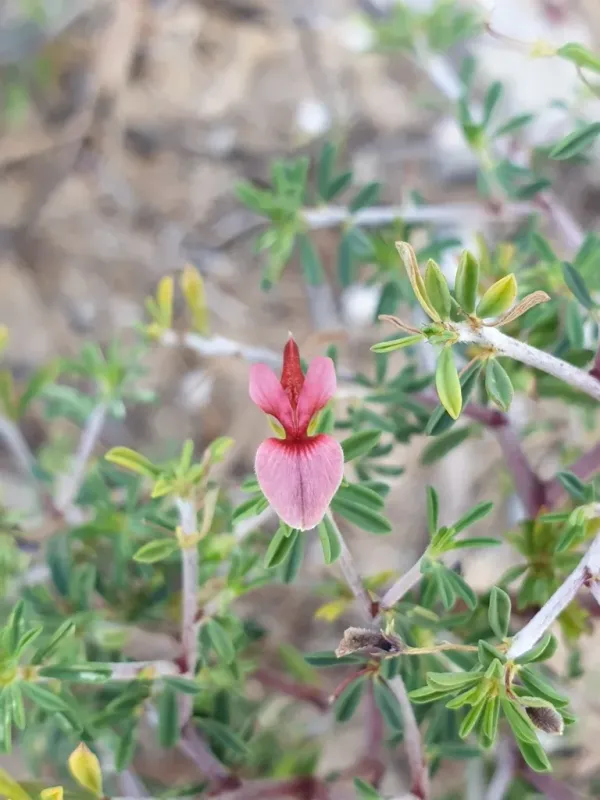
Description
Sowing dates
Indigofera aspalathoides is a small shrub belonging to the Fabaceae family, native to tropical regions where it thrives in dry and rocky environments.
Propagation is typically carried out through seeds, which should be planted in well-drained, sandy substrates to ensure successful germination and seedling growth.
The sowing season is generally aligned with the onset of monsoon rains, which provides the necessary moisture for the plants to establish their root systems.
Due to the slow initial growth rate, it is crucial to keep the cultivation area free from competitive weeds that can easily overshadow the young plants.
Spacing between plants should be sufficient to allow for adequate air circulation, which helps maintain the overall health of the growing crop.
Growing requirements
This species is highly resilient to drought and is naturally adapted to survive in harsh, sun-exposed locations with poor soil quality.
It performs best in sandy or gravelly soils where water permeability is high, as the plant is highly sensitive to waterlogging and root rot.
Full sun exposure is a non-negotiable requirement for the optimal development of the plant and the synthesis of its active phytochemical components.
The plant requires a warm climate and is susceptible to cold damage, making it unsuitable for cultivation in regions with significant frost or cold winters.
- Thrives in full sun conditions.
- Requires excellent drainage.
- Highly drought-tolerant once established.
Yield
The primary economic focus of this crop is the harvest of leaves, twigs, and roots, which are highly valued for their applications in traditional medicine.
The yield is determined by the harvest of the vegetative biomass, which is ideally gathered when the plant is in full bloom to ensure maximum potency.
Proper harvest management involves careful pruning of the stems, which can stimulate further growth and potentially increase the total yield in subsequent cycles.
Post-harvest processing involves shade-drying the collected parts to preserve the volatile and bioactive compounds necessary for therapeutic purposes.
Sustainable harvesting techniques allow for periodic collection from the same plants, extending the productive life of the field significantly.
Main diseases and pests
Excessive soil moisture is the most significant threat to the crop, as it quickly leads to the development of fungal pathogens and subsequent root decay.
Foliar diseases such as leaf spots can emerge in humid conditions, negatively affecting the quality and market value of the harvested plant material.
Pests like aphids and various leaf-feeding insects can cause localized damage, although the plant's robust nature makes it somewhat resistant to minor infestations.
Root-knot nematodes can pose a long-term threat to the health of the plants, necessitating the use of crop rotation or soil solarization practices.
Strategic management, including avoiding over-irrigation and maintaining proper plant spacing, remains the most effective defense against these threats.