
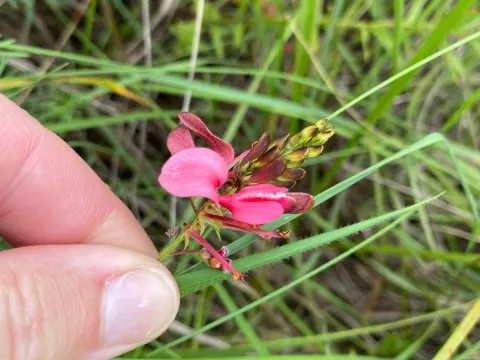
Indigofera
Indigofera
Indigofera is a tropical crop that requires stable, warm temperatures for successful germination and early growth. Sowing typically occurs at the onset of the warm season or following the end of heavy rainfall patterns.
What the section contains
 Hairy Indigo
Indigofera hirsuta L.
Hairy Indigo
Indigofera hirsuta L.
 Himalayan indigo
Indigofera himalayensis Ali
Himalayan indigo
Indigofera himalayensis Ali
 Indigofera amblyantha
 Craib
Indigofera amblyantha
Indigofera amblyantha Craib
 Indigofera decora
 Lindl.
Indigofera decora
Indigofera decora Lindl.
 Indigofera kirilowii
 Maxim. ex Palibin
Indigofera kirilowii
Indigofera kirilowii Maxim. ex Palibin
 Indigofera potaninii
 Craib
Indigofera potaninii
Indigofera potaninii Craib
 Indigofera pseudotinctoria
 Matsum.
Indigofera pseudotinctoria
Indigofera pseudotinctoria Matsum.
 Indigofera tinctoria
 L.
Indigofera tinctoria
Indigofera tinctoria L.
Indigofera
The seeds of Indigofera possess a hard coat, often necessitating pre-sowing scarification to break dormancy and ensure uniform emergence of seedlings across the field.
Seeding is performed in well-prepared, friable soil, with careful attention to planting depth, which usually ranges from 1 to 2 centimeters to ensure adequate moisture contact for the seeds.
Row planting is the standard practice, allowing for efficient mechanical weeding and ensuring that each plant has sufficient space to maximize its canopy development.
Early establishment is critical; therefore, ensuring optimal soil moisture during the first few weeks is essential for the crop to develop a robust root system capable of sustaining growth during potential dry spells.
As a member of the Fabaceae family, Indigofera thrives in well-drained loamy or sandy soils that favor nitrogen-fixing bacterial activity and prevent root suffocation.
The plant is highly demanding regarding solar exposure. High levels of direct sunlight are required throughout the growing season to maximize the concentration of the precursor to the blue pigment in the foliage.
The ideal temperature range for Indigofera is between 25°C and 35°C. It is extremely sensitive to cold and frost, which can severely stunt growth or lead to total crop failure in cooler regions.
While the plant requires sufficient rainfall or irrigation to thrive, it is strictly intolerant of waterlogged soil conditions, which can lead to rapid root decay and plant death.
Supplementing soil with phosphorus and potassium is beneficial for plant vigor and overall yield, helping the crop withstand environmental stressors while supporting secondary metabolite production.
The yield of Indigofera is defined by the total weight of the harvested green biomass, which can be collected through multiple cuttings within a single growing season.
Productivity is closely linked to the crop management system. Well-maintained plantations can support sustained production for several years before needing rejuvenation or crop rotation.
The final commercial value is determined by the indigo pigment content within the leaves, which is heavily influenced by harvest timing and the general health of the crop at the time of cutting.
Strategic nutrient management and weed control are primary drivers for maximizing biomass output, ensuring that the energy resources of the plants are directed toward foliage rather than survival.
Recording harvest yields helps in optimizing future planting cycles and refining agricultural inputs to achieve higher consistency in dye production quality.
Indigofera is prone to various leaf-feeding insects and caterpillars, which can quickly defoliate a healthy crop if not monitored and managed through integrated pest control measures.
Fungal diseases, including powdery mildew and various leaf spot pathogens, may emerge under conditions of high humidity or poor field ventilation, impacting leaf quality.
Nematode infestations can pose a significant threat, particularly in long-term plantations where the soil has not been managed through rotation, potentially leading to stunted plant growth.
Weed management is paramount during the early stages of growth, as the plant is initially slow-growing and can be easily outcompeted for sunlight and soil nutrients by fast-growing weeds.
Biological control strategies are preferred in Indigofera cultivation to ensure the final product remains free of synthetic chemical residues, which is often a requirement for sustainable textile markets.
Harvesting Indigofera involves the methodical cutting of the plant's aerial biomass at the optimal physiological stage, typically during the early flowering phase when pigment concentration is highest.
After cutting, the biomass must be processed or dried immediately to prevent premature fermentation and loss of quality in the dye compounds stored within the leaves.
Cutting height is a crucial aspect of harvest management; leaving a portion of the stem intact encourages rapid regrowth from the base, enabling multiple harvests per season.
Post-harvest care, including cultivation between rows and moderate fertilization, prepares the plants for recovery and helps maintain the plantation's overall longevity.
The logistics of the harvest must be well-coordinated with weather forecasts, as rain during the drying or transport phase can significantly degrade the quality of the harvested material.