
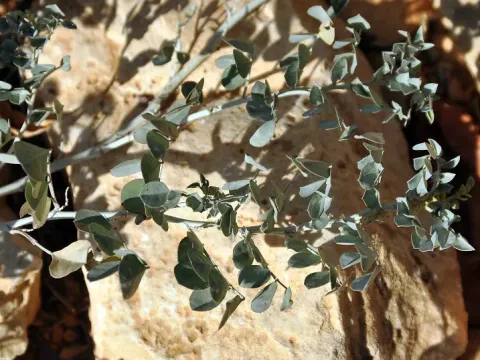
Indigofera articulata
Indigofera articulata
Indigofera articulata is a heat-loving legume that requires consistently warm temperatures to germinate. In its traditional growing regions, sowing is performed at the onset of the rainy season or when soil temperatures become stable.
What the section contains
Indigofera articulata
Soil preparation involves deep plowing to improve aeration, as the plant is sensitive to compacted earth. Seeds are typically sown in rows with spacing that allows for mechanical or manual weeding during the early stages.
Planting depth should be kept between 1 and 2 centimeters to ensure adequate contact with moist soil. Under optimal heat conditions, seedlings typically emerge within 7 to 10 days post-sowing.
Maintaining proper stand density is crucial for maximizing vegetative growth. Excessive competition between plants should be avoided to ensure that each specimen develops enough biomass for dye extraction.
Early-stage weed control is essential, as the plant exhibits slow initial growth. Regular cultivation between rows is necessary until the plants canopy over and shade out competing weeds.
This species belongs to the Fabaceae family and is a semi-shrub that reaches approximately one meter in height. It is native to the arid and semi-arid regions of Africa and the Arabian Peninsula.
Indigofera articulata prefers well-drained sandy or loamy soils. It cannot tolerate waterlogging, which quickly causes root rot and plant death. It is well-adapted to surviving prolonged dry spells once established.
The plant requires high light intensity to maximize the concentration of the glycoside indican in its leaves. Shady conditions lead to poor yields of the desired blue pigment.
An ideal climate is one with long, hot summers. The plant's metabolic activity slows down significantly in cooler climates, making it unsuitable for cultivation outside tropical or subtropical zones.
As a nitrogen-fixing legume, the plant helps improve soil fertility. It is an excellent choice for crop rotation systems intended to restore nitrogen levels in depleted agricultural fields.
The main commercial value of Indigofera articulata lies in the extraction of the natural blue pigment known as indigo. The plant leaves contain the precursors necessary for this complex chemical process.
Yields are measured in terms of green biomass. Depending on the climate and irrigation, growers can achieve up to three harvests of foliage in a single growing season.
The harvested leaves undergo a fermentation process in water tanks. This oxidation and precipitation process results in the production of the blue dye, which is subsequently dried into cakes.
Beyond its use as a dye, the plant serves as an effective cover crop. Its extensive root system helps to improve the structure of heavy, compacted soils, enhancing water infiltration and aeration.
The highest quality dye is obtained when leaves are harvested just before the onset of massive flowering, as this is when indican concentrations are at their peak.
High humidity and poor air circulation often lead to fungal infections. Powdery mildew is a common threat that can reduce the photosynthetic capacity of the leaves, thereby lowering dye yields.
Various insect pests, such as weevils and certain types of caterpillars, can cause significant defoliation. Regular monitoring and integrated pest management are necessary to protect the foliage.
Root rot is the most serious disease, usually occurring due to excessive moisture or poor drainage. This condition can devastate a field and is difficult to treat once established.
Aphids can also colonize young stems, sapping the plant of nutrients and stunting its development. Biological controls are preferred to maintain the purity of the dye-producing biomass.
Nematodes may be a concern in some regions. Using clean seed and practicing long-term crop rotation are effective ways to minimize the impact of soil-borne pests.
Harvesting involves cutting the aerial parts of the plant. A critical technical detail is to leave sufficient stem base and buds to allow for rapid regrowth for the next cutting cycle.
The best time for harvesting is early morning, after the dew has evaporated. The foliage must be transported to processing facilities immediately to prevent premature fermentation.
If harvested leaves are stored for too long before processing, the indican content degrades, leading to a significant loss in pigment quality and economic value.
Mechanical harvesting equipment must be adjusted carefully to cut at the correct height. Precision is required to ensure that the plant crown remains intact for future production cycles.
The final harvest of the season is usually timed to allow the plant to store enough energy in its root system, ensuring its survival through the upcoming dormant or dry season.