
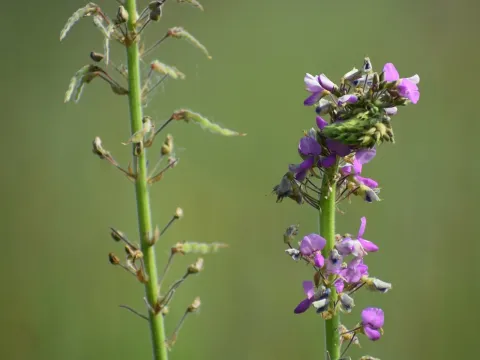
Illinois ticktrefoil
Desmodium illinoense
Illinois ticktrefoil (Desmodium illinoense) is a perennial legume highly valued for its role in native ecosystem restoration and potential forage utility. Sowing is best performed in the spring, once the soil has warmed up sufficiently to trigger germination.
What the section contains
Illinois ticktrefoil
The seeds possess a hard seed coat, which often requires scarification to ensure optimal water absorption and faster emergence. Planting depth should be maintained between 1 and 2 centimeters to avoid burying the seeds too deeply.
When sowing for row production, maintain a distance of 30 to 50 centimeters between rows. This spacing allows the young plants to establish a healthy root system while minimizing early competition for sunlight and essential soil nutrients.
In the first year of growth, the plant focuses significantly on its underground development. Consequently, the foliage growth rate may appear slow during this phase, making proper weed management vital for the plant's survival.
Adequate soil preparation prior to sowing is essential. Clearing the field of aggressive weeds will provide the seedlings with the necessary head start to dominate the plot in subsequent growing seasons.
This species thrives in open, sunny locations with well-drained soil conditions. It is remarkably adaptable and can grow in various soil types, ranging from well-draining loams to rocky or sandy substrates found in its native prairie range.
Drought tolerance is a key characteristic of the Illinois ticktrefoil. Its deep, robust taproot allows the plant to access moisture in deeper soil profiles, helping it survive hot, dry spells that might stress more shallow-rooted crops.
Regarding soil chemistry, the plant performs best in neutral to slightly acidic soils. Like other legumes, it benefits from the presence of specific nitrogen-fixing bacteria in the soil, which helps improve overall soil fertility.
Climate resilience is another strong suit of this plant, as it is well-adapted to the seasonal extremes of the temperate climate. The plant remains dormant during the winter, protecting its crown until the return of spring warmth.
It prefers good air circulation and low-density plantings. Overcrowding can lead to excessive moisture around the base of the plant, which may reduce its overall vigor and long-term viability in humid conditions.
Common agricultural pests such as aphids and various leaf-feeding insects may occasionally impact the foliage of the Illinois ticktrefoil. Monitoring during the active growing phase allows for effective early management.
Fungal issues, including powdery mildew and leaf spot diseases, can occur if the humidity levels remain high around the plants. Proper spacing and airflow are the most effective cultural controls for these health problems.
Root rot is rarely a concern unless the soil drainage is poor. Ensuring the field is situated on well-drained ground is the primary strategy to prevent soil-borne pathogens from attacking the plant's critical root system.
Invasive weed competition poses the greatest threat during the initial establishment period. Once the plants reach maturity, their dense growth habit generally provides sufficient shading to suppress surrounding weed populations.
Effective pest management should prioritize cultural and biological practices, keeping in mind that the plant serves as a nectar source for many beneficial insects, which naturally helps keep harmful pest populations in balance.