
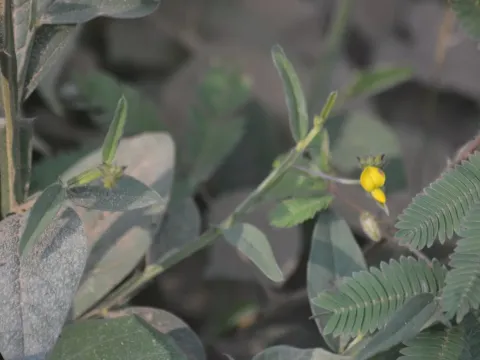
Crotalaria alata
Crotalaria alata
Crotalaria alata, commonly known as winged crotalaria, is an annual legume that serves as an excellent cover crop and green manure. It is native to tropical regions of Asia, where it is valued for its rapid growth and ability to thrive in challenging soil conditions.
What the section contains
Crotalaria alata
Sowing is typically scheduled at the beginning of the rainy season to capitalize on moisture availability. Seeds require warm temperatures, generally ranging from 25 to 30 degrees Celsius, to ensure rapid germination and uniform stand establishment.
The optimal seeding density is critical to ensure that the plants create a dense canopy, which effectively suppresses competing weed species. Broadcast or drill seeding methods can be used depending on the scale of the farming operation.
Pre-treatment of seeds, such as mild scarification, can significantly improve germination rates by facilitating water uptake. Once sown, the seeds should be covered with a shallow layer of soil to protect them from environmental fluctuations and predators.
Timing the sowing correctly ensures the plants reach their peak vegetative biomass before the flowering stage, maximizing the amount of nitrogen and organic matter that will be incorporated into the soil.
Crotalaria alata performs best in well-drained, sandy to sandy-loam soils. It is particularly valued for its tolerance to relatively low fertility soils, where it helps build organic matter and improves overall soil structure through its vigorous root system.
Full sun exposure is essential for this species. It is a light-demanding crop; shaded environments lead to stunted growth and reduced nitrogen-fixing efficiency. Therefore, site selection should prioritize open areas with unobstructed sunlight.
Water requirements are moderate. The crop is somewhat drought-tolerant once established but benefits from consistent moisture during the early vegetative phases. It is crucial to avoid waterlogged conditions, which can lead to root rot and poor nitrogen fixation.
No intensive fertilization is usually required for Crotalaria alata, as it is highly effective at symbiotic nitrogen fixation. However, modest applications of phosphorus may promote root development and nodule formation in nutrient-deficient soils.
Management practices should include monitoring for weed encroachment during the first few weeks. Once the canopy closes, the crop is highly effective at self-maintaining and shading out unwanted vegetation until the final harvest or incorporation.
The primary yield of Crotalaria alata is its green biomass. Under favorable conditions, the plant can produce significant amounts of leafy material, which serves as a potent nitrogen-rich fertilizer when incorporated into the soil.
The biomass quality is highest during the flowering stage, just before the development of mature pods. Harvesting or tilling the crop at this point provides the best balance of nitrogen content and decomposable organic carbon for the next crop cycle.
Seed yield is often a secondary objective for farmers interested in propagating the species. Harvesting should be carefully timed to coincide with the onset of pod browning to prevent the natural shattering of seeds, which is common in this genus.
Beyond soil fertility, the plant contributes to soil tilth by penetrating compacted subsoil layers with its strong taproot. This biological drilling effect facilitates improved water infiltration and aeration for subsequent deeper-rooted crops.
Total yield outcomes depend largely on the local climate and length of the growing season. In tropical environments with high precipitation, farmers may achieve multiple cycles or a high-biomass single cycle per year.
Crotalaria alata can be susceptible to various fungal pathogens, especially in areas with high humidity. Leaf spot diseases and powdery mildew are the most common issues, which can be mitigated by ensuring adequate plant spacing and good air circulation.
Insect pests, such as pod borers and aphids, can cause significant damage if populations are not monitored. Integrated pest management strategies, emphasizing the use of beneficial insects, are preferred over chemical interventions.
Nematode infestations can occur in some soils, though the plant is sometimes used as a trap crop to reduce certain nematode populations. Proper crop rotation is the most effective management strategy to prevent long-term pest and disease build-up.
Avoiding continuous mono-cropping of Crotalaria alata in the same field helps break the life cycles of specific pathogens. Diversifying the rotation schedule enhances the overall ecological health of the agricultural land.
In cases of severe pest outbreaks, mechanical removal of affected plant parts or the use of botanical insecticides may be necessary. However, the plant's natural resilience usually allows it to withstand minor damage without significant yield loss.