
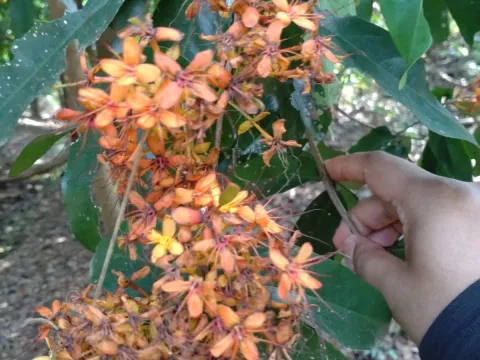
Saraca indica
Saraca indica
Saraca indica, commonly known as the Asoka tree, is an evergreen tree belonging to the Fabaceae family. It originates from the tropical regions of India and Southeast Asia, where it typically flourishes in dense, moist forest habitats.
What the section contains
Saraca indica
The cultivation of this plant requires a tropical climate with temperatures ideally staying between 20°C and 30°C. It is highly sensitive to frost, which makes it unsuitable for outdoor cultivation in temperate regions without protection.
This species thrives in deep, fertile, and well-drained soils rich in organic matter. A slightly acidic to neutral soil pH is preferred, and soil moisture must be consistent to support the tree’s active growth phase.
Regarding agricultural practices, young trees require significant shade to prevent sun damage. As they mature, they can withstand more light but still prefer protection from harsh, direct midday sunlight in hot climates.
Beyond its aesthetic appeal in landscapes, Saraca indica is culturally and economically valued for its bark, which is utilized in traditional pharmacological practices, and for its fragrant, vibrant flower clusters used in ceremonies.
Fungal infections, particularly root rot and leaf spot, represent the most significant threats to Saraca indica, especially in environments with poor soil drainage or high humidity and stagnant air.
Insect pests, including aphids and scales, frequently infest the foliage and soft shoots. If left unmanaged, these pests can severely weaken the tree's vigor and facilitate the entry of secondary diseases.
Nutrient deficiencies may manifest as chlorosis on the leaves, indicating the need for a balanced application of micronutrients to maintain the tree's health and resistance to external stresses.
Management strategies involve rigorous monitoring of leaf condition and the use of targeted systemic fungicides or insecticides when pest populations exceed the economic threshold for the specific site.
Proper pruning practices are essential to improve canopy airflow, which significantly reduces the risk of fungal proliferation and promotes overall plant hygiene in both orchard and garden settings.