
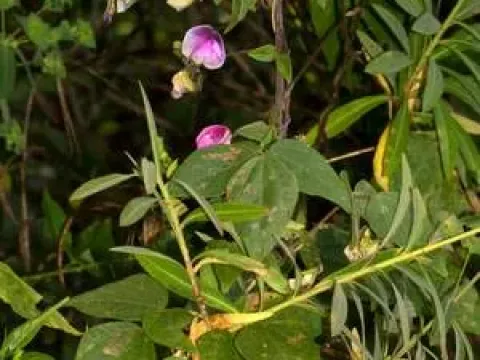
Dolichos sericeus
Dolichos sericeus
Dolichos sericeus is a member of the Fabaceae (legume) family, known for its climbing habit and suitability for warm-climate agricultural systems as a forage or cover crop.
What the section contains
Dolichos sericeus
Sowing should take place once the soil has reached a stable temperature of at least 15–18 degrees Celsius, ensuring optimal conditions for seed germination and seedling emergence.
Seeds should be planted at a depth of 3 to 5 centimeters, depending on the moisture level of the seedbed and the texture of the soil to ensure rapid root establishment.
In regions with shorter growing seasons, starting plants in trays or small pots under greenhouse conditions is recommended to give the crop a head start before outdoor transplanting.
Proper spacing is crucial for canopy management, typically requiring 40 to 60 centimeters between plants to allow for sufficient air circulation and light penetration.
This crop thrives in sunny, warm environments and is highly sensitive to cold temperatures and frosts, which can significantly damage its vegetative growth.
It prefers well-drained, fertile soil types, ranging from sandy loams to silty clays, provided that the pH is within the neutral range for optimal nutrient availability.
While the plant exhibits moderate drought tolerance, adequate moisture throughout the flowering and pod-filling stages is essential for achieving a high biomass yield.
As a legume, it benefits from the presence of native nitrogen-fixing bacteria, which helps reduce the need for synthetic nitrogen fertilizers in low-input farming systems.
Support structures like trellises or companion crops are often necessary to keep the foliage off the ground, promoting healthier growth and easier management during the season.
Fungal diseases, including various types of leaf spot and powdery mildew, represent the primary threat to Dolichos sericeus, especially in high-humidity climates.
Effective disease control is achieved through crop rotation, maintaining proper plant density, and ensuring field sanitation by removing infected plant debris.
Insect pests such as aphids and spider mites can cause significant damage to young leaves and stems during hot and dry spells, necessitating early intervention.
Stored seeds are susceptible to attack by bruchid beetles, which makes proper post-harvest treatment and storage in clean, cool, and dry containers a priority.
Integrated pest management (IPM) practices, including the use of pheromone traps and beneficial insect release, are recommended to minimize the reliance on chemical pesticides.