
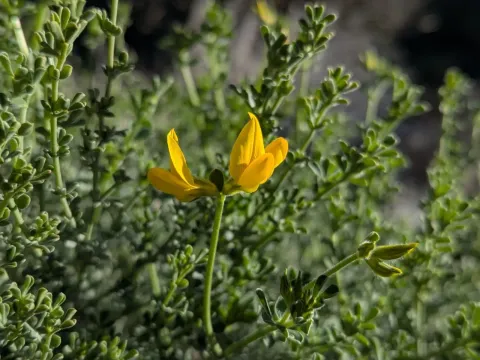
Dorycnium
Dorycnium Mill.
Sowing Dorycnium should be carried out in early spring as soon as the soil reaches temperatures of 8–10°C to ensure optimal seed germination.
What the section contains

Dorycnium
Seeding rates depend on the intended use: 12–15 kg/ha for pastures, and 8–10 kg/ha for seed production purposes.
It is crucial to roll the soil after sowing to ensure close contact between seeds and the soil, which is essential for uniform emergence.
Seedlings develop slowly during the first year, making weed control in the initial establishment phase a top priority for successful cultivation.
The preferred method of sowing is using a drill with 15–20 cm row spacing, which allows for easier mechanized maintenance of the crop.
Dorycnium belongs to the Fabaceae family and is a perennial herb or subshrub known for its exceptional drought and heat tolerance.
The plant thrives on poor, rocky, and sandy soils where other forage species often fail to yield sufficient biomass.
Dorycnium is characterized by its nitrogen-fixing capabilities, which improve soil fertility, making it a valuable inclusion in crop rotations.
The crop is highly light-demanding and does not tolerate shading by taller species, therefore requiring open areas for optimal development.
Minimal water requirements after establishment make this species a promising candidate for phytoremediation of eroded slopes and sandy ground stabilization.
Green matter yield of Dorycnium varies based on environmental conditions, typically ranging from 15 to 25 tonnes per hectare per season.
Seed production is stable, averaging between 300 and 500 kg per hectare when optimal agronomic practices are followed.
The nutritional value of Dorycnium lies in its ability to maintain high biomass availability during summer droughts when grasses often dry out.
When used for pasture, Dorycnium shows excellent regrowth potential after grazing, extending the utilization period of the land.
Maximum productivity is typically observed from the second to the third year as the root system fully develops in the soil profile.
Major diseases affecting Dorycnium include fungal infections such as leaf spots and rust, particularly during periods of high humidity.
Pests that target legumes, such as weevils and aphids, represent a threat to Dorycnium fields, especially during active growth phases.
To mitigate the spread of pathogens, it is recommended to practice crop rotation and carry out timely insecticide treatments if thresholds are exceeded.
Root rot may occur in heavy or waterlogged soils, highlighting the importance of selecting well-drained sites for this plant.
Mechanical weeding or the use of approved herbicides for legumes remains an effective strategy for controlling invasive weeds in Dorycnium stands.
Harvesting Dorycnium for hay should take place during the peak flowering stage to ensure the highest concentration of nutrients in the foliage.
During seed harvesting, it is critical to avoid over-ripening, as the pods are prone to shattering and seed loss in the field.
Seed crops are typically harvested by direct combining when 70–80% of the pods are mature, using desiccation if necessary.
Harvested seeds must be cleaned and dried to a moisture content of 12–14% to ensure long-term stability during storage.
Post-harvest plant residues can be incorporated into the soil as organic fertilizer, providing significant nitrogen enrichment to the field.