
Dwarf false indigo
Amorpha nana
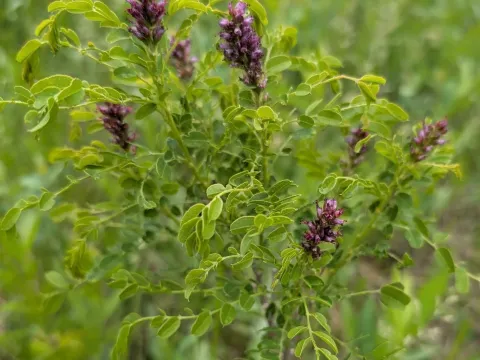
Dwarf false indigo (Amorpha nana) is a small, deciduous shrub that belongs to the pea family, Fabaceae. It is a distinct species known for its compact growth habit, typically reaching heights between 60 and 90 centimeters, which contrasts significantly with the larger members of the Amorpha genus.
What the section contains
Dwarf false indigo
Native to the North American prairies, this plant has evolved to thrive in harsh environments. It is highly valued for its exceptional drought tolerance and its ability to withstand severe winter temperatures, making it a reliable choice for gardens in challenging climates across its range.
Regarding soil and site requirements, Amorpha nana prefers open, sunny locations with well-draining soil. It is well-suited for sandy or rocky substrates where its deep root system can establish itself effectively. Like many legumes, it fixes atmospheric nitrogen, allowing it to grow successfully in nutrient-poor soils.
Cultivation practices are relatively straightforward, focusing mainly on providing adequate sunlight and avoiding waterlogged soil conditions. Young plants benefit from light watering during the first season until they are established, but once mature, the shrub becomes largely self-sufficient and requires very little maintenance.
The plant is frequently utilized in xeriscaping, slope stabilization, and as an ornamental specimen in prairie-style landscapes. Its purple flower spikes are a magnet for bees and other pollinators, adding an ecological value that makes it a beneficial addition to biodiversity-focused gardening projects.
The primary health risk for dwarf false indigo is root rot, which occurs if the soil drainage is inadequate. Ensuring that the planting site is elevated or properly amended with coarse sand can significantly reduce the risk of fungal pathogens affecting the root system during the dormant period.
Pest management for this species is minimal. Occasionally, aphids may colonize the young growth during the spring flush. Monitoring during the early growth stages is usually sufficient, as the plant is hardy enough to recover from minor infestations without the need for intensive chemical interventions.