
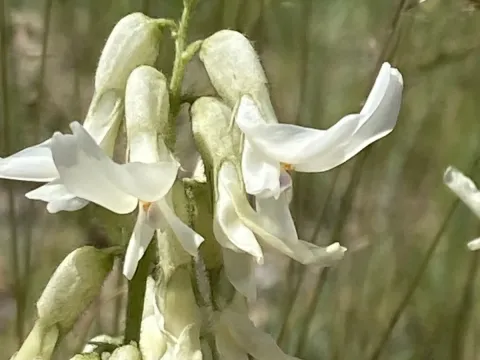
Drummond's milkvetch
Astragalus drummondii
Drummond's milkvetch (Astragalus drummondii) is a perennial herbaceous plant belonging to the Fabaceae family, native to the North American prairies. This species is highly valued for its adaptation to arid conditions and its ability to thrive in challenging soil environments.
What the section contains
Drummond's milkvetch
The optimal sowing time is early spring, once the soil has warmed to at least 8–10 degrees Celsius. Because the seeds have a hard, impermeable seed coat, they require scarification to break dormancy and ensure consistent germination in field conditions.
It is recommended to use row seeding with intervals of 30–45 centimeters, providing adequate space for the plant to develop its deep taproot system. Planting depth should be strictly controlled, typically ranging between 1.5 and 3 centimeters depending on soil texture.
Seedlings usually emerge within 14 to 20 days after sowing, influenced by soil moisture and ambient temperature. During the first year, growth is focused on root development, leading to a relatively slow establishment of the above-ground biomass.
Fall sowing is permissible in regions with milder winters, as the cold stratification process can naturally improve spring germination rates. This practice is often used to ensure early establishment before the onset of the summer dry season.
Drummond's milkvetch is noted for its exceptional winter hardiness and tolerance to extreme temperature fluctuations. It is well-adapted to continental climates where seasonal moisture deficits are a common occurrence.
The plant performs best on well-drained loamy or sandy soils with a neutral to slightly alkaline pH. It is highly sensitive to waterlogged conditions, which can quickly lead to root rot and significant stand loss, making site selection crucial.
As a legume, this species fixes atmospheric nitrogen through a symbiotic relationship with Rhizobium bacteria, significantly improving soil fertility. This makes it a valuable component in crop rotation cycles, particularly for rejuvenating degraded land.
Full sun exposure is essential for vigorous growth and flowering. Any shading from competing vegetation or trees will lead to stunted growth and a marked reduction in the overall yield of the forage.
Adequate calcium levels are vital for root development and structural integrity. Farmers should consider soil testing and potentially applying phosphorus and potassium amendments prior to planting to support early growth stages.
Drummond's milkvetch is primarily used for forage in pasture settings within arid and semi-arid regions. Yields typically peak during the second or third year of stand life, offering a reliable source of nutrition when other grasses may fail.
Under favorable management or supplementary irrigation, hay yields can reach 30–50 decitonnes per hectare. The biomass is protein-rich, providing a balanced nutritional supplement for livestock grazing on rangelands.
Seed production relies heavily on the presence of native pollinators, as this species is entomophilous. Harvesting should be performed promptly when the pods turn brown to prevent seed shattering, which can happen quickly in hot, windy weather.
The deep taproot system makes this plant an excellent choice for soil conservation and erosion control, as it can access nutrients and water from deeper soil profiles that are unavailable to shallower-rooted species.
A stand will generally provide reliable productivity for 5 to 7 years. Beyond this period, productivity tends to decline, suggesting that a planned rotation or stand rejuvenation strategy should be implemented for sustained agricultural utility.
This species is generally resilient to many common legume diseases; however, root rot (Fusarium spp.) can become an issue in poorly drained soils. Managing drainage remains the most effective prophylactic measure against fungal pathogens.
Clover root curculios and other insect pests may occasionally attack young seedlings, potentially damaging the root system. Field scouting during the establishment phase is recommended to determine the necessity of control measures.
Aphid infestations can occur during peak summer months, potentially affecting plant vigor. Integrated pest management, favoring biological controls and minimal chemical interference, is preferred to maintain the health of the field ecosystem.
Powdery mildew may develop in humid conditions, though it rarely causes total crop failure. Ensuring proper plant spacing improves air circulation, which is a simple and effective strategy to mitigate the risk of mildew spread.
Avoiding excessive nitrogen fertilization is important, as it can make tissues more susceptible to herbivorous insects. Maintaining a balanced nutrient profile helps the plants defend themselves naturally against environmental and biotic stresses.