
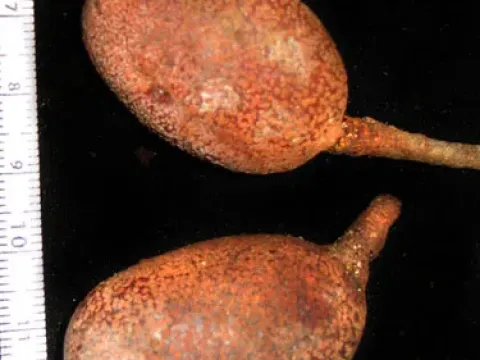
Hymenaea oblongifolia
Hymenaea oblongifolia
Propagation of Hymenaea oblongifolia is typically achieved through seeds, which are contained within large, woody fruit pods. In forest management, seeds are collected when fully mature to ensure the highest germination success rates.
What the section contains
Hymenaea oblongifolia
Seed scarification is often recommended before planting to penetrate the hard outer seed coat, which significantly promotes faster and more uniform seedling emergence in nursery environments.
Seedlings require shaded conditions during their initial growth phase. Protecting them from intense tropical sun prevents physiological stress and improves survival rates during the critical establishment period.
Transplanting to permanent sites is generally performed once the saplings have developed a strong, woody stem, usually 6 to 12 months after germination, depending on local soil conditions.
Maintaining a weed-free zone around young trees for the first few years is essential to reduce competition for nutrients and water, allowing the tree to establish its deep root system efficiently.
Hymenaea oblongifolia is a member of the Fabaceae family and is native to the tropical ecosystems of South America. It thrives in environments with high annual precipitation and consistent temperatures.
The tree prefers deep, well-drained, fertile soils, particularly alluvial deposits. It is intolerant of waterlogged conditions, making proper site drainage a primary requirement for successful plantation establishment.
A stable tropical climate with temperatures between 24 and 28 degrees Celsius is ideal for continuous growth. The tree does not tolerate freezing temperatures or prolonged seasonal cold.
Like many tropical legumes, it maintains a symbiotic relationship with nitrogen-fixing bacteria. Ensuring the presence of these beneficial soil microorganisms is crucial for optimal growth on less fertile lands.
While somewhat drought-tolerant once mature, young plants require a consistent water supply during their early development years to achieve structural maturity.
The primary economic output of Hymenaea oblongifolia is its high-quality timber, known in the industry as Jatoba. It is highly valued for its extreme hardness, density, and resistance to wear and decay.
The tree also produces a valuable resin known as copal. This substance is harvested by wounding the bark and has historically been used in the production of high-quality varnishes and lacquers.
The fruit of the tree contains an edible, mealy pulp that is utilized locally as food. While not currently a major export commodity, it remains an important non-timber forest product.
Commercial timber yields are realized only after several decades, reflecting the slow-growth nature of this species, which contributes to the superior mechanical properties of the wood.
Sustainable management practices allow for long-term productivity, combining timber extraction with the harvesting of resin and supporting local biodiversity.
Fungal diseases affecting the root system represent a significant threat in nurseries if drainage is poor. Sanitation and regulated irrigation are the best preventative measures.
Wood-boring insects and termites are the most common pests that can compromise the structural integrity of the trunks, leading to significant economic losses in timber plantations.
Aggressive growth of lianas and epiphytes can physically overwhelm young trees, reducing their photosynthetic efficiency and potentially causing stem deformations.
Disturbances in the local ecosystem, such as deforestation or alteration of water tables, can increase the trees' vulnerability to opportunistic pests and pathogens.
- Root rot caused by Phytophthora species
- Termite infestations in mature wood
- Mechanical damage from climbing vines
Fruit harvesting is performed manually, typically after the pods have naturally fallen to the ground. This ensures that the contents have reached full maturity.
Timber harvesting must be conducted according to strict sustainable forestry guidelines, emphasizing selective logging of mature specimens rather than clear-cutting practices.
Resin collection requires skilled techniques to extract the copal without damaging the tree’s cambium layer, ensuring the tree remains healthy and productive for subsequent harvests.
Harvested timber undergoes a rigorous seasoning and drying process to minimize shrinkage and warping, ensuring the wood meets international quality standards for cabinetry and flooring.
The entire supply chain must be managed to handle the logistical challenges inherent in harvesting tropical forest resources efficiently and responsibly.