
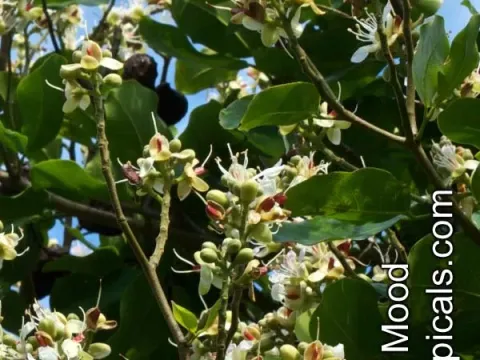
Hymenaea verrucosa
Hymenaea verrucosa
Hymenaea verrucosa is a slow-growing tropical tree, making traditional agricultural sowing methods inapplicable. Propagation is primarily carried out via seeds in nurseries where environmental conditions are carefully monitored and maintained.
What the section contains
Hymenaea verrucosa
The seeds require pre-sowing scarification due to their tough seed coat, which significantly accelerates the germination process. The optimal time for planting is the beginning of the rainy season, when temperatures and soil moisture are conducive to initial root system development.
In specialized farming, seeds are sown in containers with nutrient-rich, organic-based substrate. It is crucial to plant at an appropriate depth, allowing the seedling to develop a robust taproot system during the early stages of its growth cycle.
Transplanting to the permanent location occurs once the seedling reaches a height of 40 to 60 centimeters. This phase requires significant care, as the species is sensitive to root disturbance when transitioning from containers into the open ground.
In natural habitats, regeneration is generally slow. In agricultural plantations, tree spacing should be at least 5 to 8 meters to provide sufficient space and resources for each individual tree to reach maturity.
This species belongs to the Fabaceae family and requires specific tropical conditions to thrive. The tree prefers regions with high average annual temperatures and minimal seasonal fluctuations throughout the calendar year.
The plant grows successfully in well-drained soils, including sandy and loamy textures. A key requirement is avoiding waterlogging, as the root system of Hymenaea is sensitive to excessive soil moisture, which increases the risk of root rot and decline.
Originating from regions in East Africa and Madagascar, the tree is adapted to humid tropical forests. However, it displays a level of tolerance for short-term dry spells, making it somewhat resilient to seasonal weather changes.
Light exposure is critical: young seedlings require partial shade to avoid heat stress, while mature trees are sun-loving. Insufficient light exposure in adulthood results in slowed stem growth and reduced production of resinous compounds.
Fertilizer requirements are moderate; however, regular application of organic matter during the first few years significantly increases biomass growth rates. Mulching around the base of the trees helps maintain soil moisture and effectively suppresses weed competition.
The primary economic value of this crop lies in the production of high-quality resin, commonly known as Zanzibar copal. Resin yield is directly dependent on the age of the tree, its overall health, and the specific climatic conditions of the cultivation site.
Harvesting involves tapping the bark or carefully collecting natural resin exudates that accumulate in branch crotches or near the base of the trunk. A healthy mature tree can yield significant quantities of this valuable resin annually.
The timber of Hymenaea verrucosa is highly prized in the furniture industry and construction for its hardness and durability. Yield calculations for timber are based on standard forestry metrics, accounting for trunk volume and stand density per hectare.
Secondary economic uses include the collection of seeds, which contain various biologically active compounds. Seed productivity fluctuates depending on weather conditions during the flowering period and the presence of effective insect pollinators.
Improving yield efficiency is achieved through modern plantation management techniques. Selective breeding of trees with higher resin-producing capacity allows for better economic returns from large-scale cultivation efforts.
Hymenaea verrucosa is susceptible to various xylophagous insects that bore into the tree trunks. Constant monitoring of the bark allows for the early detection of infestations, preventing long-term damage and loss of timber market quality.
Fungal diseases pose a serious threat in high-humidity conditions. Pathogens can cause root rot, which often leads to the death of young seedlings or the weakening of mature trees, making them susceptible to secondary infections.
Weed competition is a significant threat during the early years, as vegetation competes for moisture and nutrients. Maintaining clean, well-managed plantations is necessary, especially during the first three to five years after planting.
Leaf-eating insects can negatively impact photosynthesis, leading to stunted growth and reduced resin synthesis. Effective defense strategies include a combination of biological control methods and targeted agrochemical treatments when necessary.
Climatic stressors, such as extreme rainfall or prolonged abnormal droughts, may indirectly trigger disease outbreaks. Strengthening the overall health of the plantation through proper agrotechnical care is the primary defense strategy for this crop.