
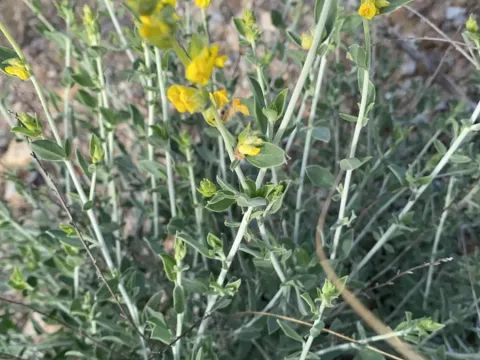
Hymenocarpos
Hymenocarpos
Sowing Hymenocarpos (Hymenocarpos circinnatus) is typically planned for early spring when soil temperatures reach 10–12 degrees Celsius. This timing ensures that the seeds benefit from the residual soil moisture from melting snow, which is vital for uniform and rapid germination.
What the section contains


Hymenocarpos
The standard seeding method involves drilling at a shallow depth of 2–3 centimeters. Proper placement of seeds is crucial to avoid stress during the emergence phase, as the plant needs to develop its initial root system quickly to withstand potential early-season dry spells.
Before sowing, the soil must be prepared to a fine tilth. A well-leveled seedbed promotes optimal soil-to-seed contact, which significantly improves the field germination rate and helps in establishing a uniform crop stand across the entire field.
Seeding rates should be determined based on local environmental conditions and the intended use of the crop. Agronomists recommend adjusting these rates to ensure the optimal plant density that allows for both high biomass production and efficient nutrient uptake.
In arid regions, winter sowing is sometimes considered as an alternative, provided that the climate allows the seeds to survive winter temperatures without premature germination. However, spring sowing remains the standard practice for consistent and reliable results.
Hymenocarpos is a legume known for its exceptional resilience in arid and semi-arid environments. It has a deep, robust taproot system that allows it to access moisture from deeper soil layers, making it a highly effective crop in drought-prone areas.
The plant thrives in light sandy or stony soils with a neutral to slightly alkaline pH. It is sensitive to waterlogging, so fields should have excellent drainage. Soil selection should prioritize areas where there is no risk of stagnant water or excessive saturation.
Climate-wise, this crop prefers open, sunny locations where it can receive maximum solar exposure. It is well-adapted to high temperatures during its vegetative phase, making it suitable for southern regions where heat stress limits the growth of other common forages.
A key biological advantage of Hymenocarpos is its ability to fix nitrogen via symbiotic relationships with root bacteria. This process enriches the soil with natural nitrogen, making the plant an excellent rotational crop that improves the fertility of the land for subsequent plantings.
The plant's ability to thrive in poor or degraded soil conditions makes it a valuable tool for restoring pasturelands and managing land that is not suitable for high-intensity monoculture. Its inclusion in a crop rotation can significantly enhance soil structure over time.
The yield of Hymenocarpos depends heavily on the moisture availability during the growing season and the management practices employed. While it may not compete with high-input grasses, it provides a stable and predictable forage source in challenging conditions.
As a forage crop, it is highly valued for its protein content. It serves as an excellent component in the diet of small and large ruminants, contributing to better weight gain and overall herd health in grazing systems where high-quality feed is often scarce.
Seed production is another aspect of its commercial use. Harvesting must be carefully timed, as the pods are prone to shattering. Achieving the correct balance in harvest timing is essential for maximizing yield and preventing loss before the harvest equipment can enter the field.
When used as a green manure, the crop's biomass contributes to significant soil organic matter accumulation. This practice helps to improve water retention and soil biodiversity, which are critical components of sustainable agricultural systems in dry zones.
Average yield figures vary by region and soil type, but with standard agricultural management, Hymenocarpos remains a reliable source of dry matter. These results are encouraging for farmers looking to diversify their forage base in water-limited agricultural settings.
Hymenocarpos is relatively resistant to common pathogens, but it can be susceptible to fungal diseases like powdery mildew if soil conditions are too moist. Effective prevention strategies focus on maintaining soil drainage and avoiding dense, overcrowded planting patterns.
Pests such as the pea weevil (or similar nodule-feeding pests) can affect plant health by damaging the root system and hindering nitrogen fixation. Routine field inspections are recommended during the early growth stages to monitor for potential insect outbreaks.
Aphids can pose a risk by spreading viral diseases through their feeding activities. Farmers should prioritize integrated pest management (IPM) practices, utilizing biological controls or targeted, selective insecticides only when necessary to protect the crop's health.
Weeds are the primary competitor during the early weeks of the crop's life cycle. Because the plant grows relatively slowly at first, early-stage mechanical cultivation between the rows is essential to ensure that the Hymenocarpos establishes dominance over competitive weeds.
Field rodents can occasionally cause damage to the crop, particularly near the seedling stage or when the seeds are maturing. Maintaining good farm hygiene and preventing excessive shelter for rodents in the field are effective long-term management strategies.
Harvesting for hay should be timed for the peak flowering phase to ensure the highest concentration of nutrients in the foliage. Proper curing and drying are essential to prevent mold growth and maintain the quality of the hay for long-term storage.
Seed harvesting is generally performed with combine harvesters. The settings of the threshing unit should be precise to avoid crushing the seeds, as this maintains their viability for the next season. Quick processing after harvest is required to prevent heat-related degradation.
Storage of the harvested seeds should be done in a dry, ventilated environment away from rodents and pests. Maintaining low humidity in the storage space is critical to preserving the germination power of the seeds for a full season or longer.
Agricultural waste remaining after the harvest can often be used as lower-grade fodder or incorporated back into the soil as organic matter. This helps in utilizing the full potential of the crop and closing the nutrient cycle within the farm.
Post-harvest soil management involves stubble incorporation, which prepares the field for future planting. This practice helps in maintaining soil moisture and reduces erosion, contributing to the overall sustainability of the farming enterprise.