
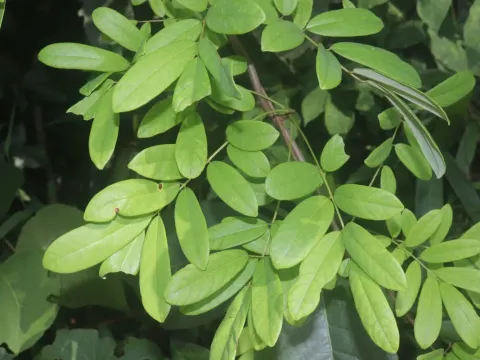
Derris canarensis
Derris canarensis
Derris canarensis is a prominent member of the Fabaceae family, recognized for its climbing woody growth habit. This species is native to tropical habitats, primarily found in regions where high rainfall and consistent warmth are maintained throughout the year.
What the section contains
Derris canarensis
The botanical structure of this vine allows it to adapt to forest canopy environments, using trees as natural supports to reach sunlight. In agricultural settings, it is valued for its root system, which accumulates specific bioactive compounds known as rotenoids.
The soil requirements for this crop include deep, well-draining substrates rich in organic matter. Sandy-loam soils are ideal, as they allow roots to penetrate deep while preventing the waterlogging that often leads to root decay in tropical species.
Agricultural management involves providing vertical support structures to maximize growth efficiency. This practice facilitates easier maintenance and ensures that the plant canopy receives adequate exposure to sunlight, which is crucial for nutrient synthesis.
Climate conditions are the limiting factor for commercial production. Derris canarensis thrives in humid environments with temperatures ranging between 22 and 30 degrees Celsius. It is highly susceptible to chilling injury, making it unsuitable for temperate climates.
The primary threats to Derris canarensis involve soil-borne pathogens, particularly fungi that cause vascular wilts. Consistent moisture management is essential to mitigate the risk of these infections in agricultural plantations.
Foliar pests, including aphids and various lepidopteran larvae, pose a constant challenge to the development of healthy leaf biomass. Integrated pest management strategies are generally preferred to preserve the natural chemical profile of the plant.
Weed competition represents a significant threat during the seedling stage. Young vines lack the vigor to outcompete aggressive tropical weeds, requiring manual or mechanical weeding until the crop becomes established.
Nutrient deficiencies, specifically nitrogen and magnesium imbalances, can significantly reduce yield quality. Regular soil testing is recommended to optimize the fertilization schedule for the cultivation area.
Climate-related stresses such as prolonged heavy rains can lead to root asphyxiation, while sudden dry spells may cause leaf wilting. Adequate mulching techniques are used to stabilize the soil temperature and moisture levels around the root zone.