
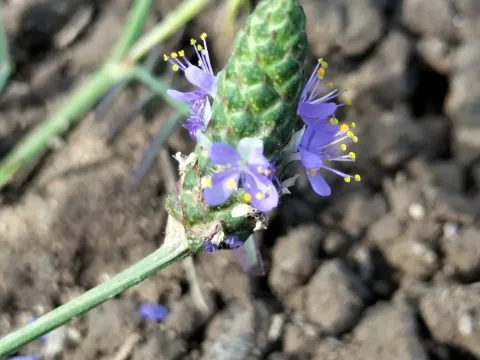
Dalea alopecuroides
Dalea alopecuroides
Dalea alopecuroides, commonly known as foxtail dalea, is an annual legume that is primarily established via spring seeding. It is essential to ensure soil temperatures have sufficiently risen before sowing to promote rapid germination.
What the section contains
Dalea alopecuroides
Due to the hard seed coat characteristic of many legumes, scarification is often recommended to improve the germination rate. This preparation ensures more uniform stands and reduces the period of vulnerability during the initial seedling stage.
The optimal seeding depth is shallow, typically ranging from 1 to 2 centimeters. Proper soil contact is critical to maintain adequate moisture levels around the germinating seeds in dryer climates.
Row spacing is usually maintained between 15 and 30 centimeters to balance plant competition and maximize biomass yield. This spacing also facilitates easier mechanical weed control in the early growth phases.
Seeding rates depend on the specific site conditions and intended use, typically averaging between 8 and 12 kilograms per hectare. Proper calibration of seeding equipment is necessary to ensure target density.
Foxtail dalea thrives in well-drained, sun-exposed sites. It is remarkably well-adapted to drought conditions, making it an excellent candidate for regions where water resources are frequently limited.
The species performs best in sandy or loamy-textured soils. It is highly efficient at establishing itself in soils with lower fertility levels, provided that basic mineral requirements for legumes are met.
A significant agronomic advantage of Dalea alopecuroides is its nitrogen-fixing ability. Through symbiotic relationships with soil bacteria, it improves soil nitrogen status, benefiting subsequent crops in a rotation.
The plant demonstrates good tolerance to heat and dry air. However, consistent soil moisture during the first few weeks of growth is essential to ensure the root system is sufficiently developed to survive later heat spells.
Soil testing is advised to determine phosphorus and potassium levels. Although the crop is not overly demanding, supplemental fertilization on nutrient-poor soils can significantly enhance the quality of the green forage produced.
Dalea alopecuroides generally exhibits high resilience against common field crop diseases. However, prolonged periods of high humidity can trigger fungal issues such as root rots in poorly drained spots.
Insect pests such as weevils can occasionally cause damage to early-stage seedlings. Proactive monitoring during the first month after emergence allows for timely intervention if damage exceeds economic thresholds.
Integrated pest management strategies should be employed to protect the crop. Because the plant attracts beneficial insects and pollinators, the selection of selective insecticides is crucial when chemical control is required.
Weed competition is primarily a concern only during the crop's establishment. Once the canopy closes, foxtail dalea effectively suppresses most weeds, reducing the need for aggressive herbicide usage.
To mitigate long-term disease risks, it is recommended to implement a diverse crop rotation. Avoiding back-to-back planting of legume species helps to break the life cycle of soil-borne pathogens and pests.