
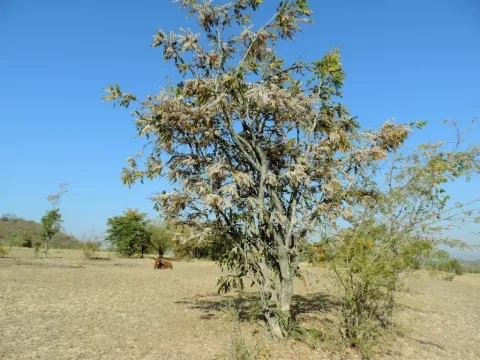
Dalbergiella
Dalbergiella
Dalbergiella is a genus of woody plants belonging to the legume family (Fabaceae). It is primarily found in the tropical regions of Africa, where it plays a significant role in local ecosystems due to its ability to fix atmospheric nitrogen and enrich depleted soils.
What the section contains
Dalbergiella
In its natural habitat, seed dispersal occurs after the rainy season. For artificial cultivation, it is essential to ensure proper seed treatment; the hard seed coat typically requires scarification to improve germination rates in nursery settings.
The optimal time for establishing plantations or transplanting saplings coincides with the beginning of the monsoon season. This allows the plants to establish a stable root system in moist soil before the onset of the dry season, which is critical for seedling survival.
Planting density depends on the intended use: for windbreaks or forest belts, a spacing of 3–4 meters is standard. In agroforestry systems, sparse arrangements are often practiced to allow sufficient sunlight for intercropped plants.
Young plants require regular watering during their first year of growth. Once the saplings reach a height of 1.5–2 meters, they exhibit remarkable resistance to environmental stressors and require minimal ongoing maintenance.
The crop thrives in well-drained, loamy, or sandy soils with a neutral to slightly acidic pH. Waterlogging is detrimental to the root system, making elevated sites or sloping terrain the preferred locations for planting.
Dalbergiella is a heat-loving species that achieves maximum growth rates in tropical climates with average annual temperatures ranging from 22 to 30 degrees Celsius. The plant does not tolerate frost, limiting its large-scale cultivation to tropical zones.
Light availability is crucial during early development. Although mature trees can withstand partial shade, they require full sun exposure during active vegetative periods to develop a dense, healthy canopy structure.
The plant exhibits high drought tolerance due to its deep taproot system. However, to maintain high wood quality or maximize biomass production, a distinct rainy season remains a necessary condition for success.
Nitrogen fertilization is generally unnecessary, as members of the Fabaceae family engage in symbiosis with nitrogen-fixing bacteria. Phosphorus and potassium supplements are recommended only when planting on extremely exhausted soils to stimulate initial root development.
The primary yield metric for Dalbergiella is the volume of harvested wood and total biomass. Under plantation conditions, annual growth can reach significant levels, making this culture a promising asset for long-term sustainable forestry.
Economic utility includes the application of its timber in woodworking and furniture manufacturing. The density and grain texture of the wood allow for the creation of high-quality, durable goods resistant to warping and deformation.
In addition to timber, the fruit and leaves are highly valued in traditional agroforestry as organic fertilizer. The nitrogen-rich leaf litter significantly improves the soil structure and overall fertility of local agricultural lands.
Utilizing the plant as a living hedge can generate recurring income through the sale of seeds and cuttings for propagation. With proper sanitary pruning, the tree remains productive for several decades.
Economic efficiency is enhanced when Dalbergiella is integrated into intercropping systems. Growing it alongside cereal crops allows for increased total land productivity without depleting the nutrient reserves of the soil.
Typical threats include fungal infections that proliferate in conditions of excessive humidity and poor canopy aeration. Infestation of the trunks by bracket fungi can lead to wood rot, significantly reducing the commercial value of the timber.
Among insect pests, wood borers and weevils are the most dangerous, as they can cause extensive damage to both young shoots and mature trunks. Regular sanitary thinning of infected trees is necessary to contain pest populations.
Poor agricultural practices, such as excessive nitrogen fertilization, often provoke overly rapid growth of soft wood, making the tree more susceptible to mechanical damage and aphid infestations.
In intensive farming zones, weed competition is a major concern during the first two years of a sapling’s life. Timely mulching of the root zone helps minimize the need for chemical herbicides while protecting young roots.
To prevent disease outbreaks, spatial isolation between stands of different ages is recommended. Maintaining strict hygiene for all pruning tools is a mandatory requirement for preventing the spread of viral and bacterial pathogens.
Timber harvesting occurs when the trees reach technical maturity, which typically takes between 15 and 20 years. Selective logging practices are encouraged to maintain the long-term stability and ecological health of the stand.
Seed collection for reproduction is carried out manually after the pods naturally split while still on the tree. To ensure high viability, seeds must be thoroughly dried in the shade and cleaned of all plant debris before storage.
When grown for soil enrichment, pruning of the shoots is performed during the active growing season. The harvested green biomass is then shredded and incorporated into the topsoil to decompose, providing natural fertilization.
The timber processing cycle includes natural air drying followed by treatment with protective coatings. This process is essential to prevent cracking and stabilization of the material against fluctuations in ambient humidity.
Waste wood from primary processing can be converted into charcoal or sawdust. This approach ensures nearly zero-waste utilization of the biological resource, maximizing the return on the plantation investment.