
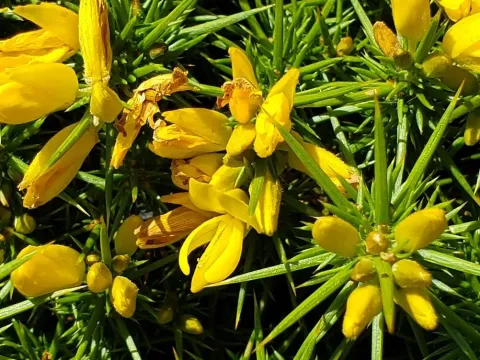
Western gorse
Ulex gallii
Western gorse (Ulex gallii) is a perennial evergreen shrub belonging to the Fabaceae family. Native to the Atlantic coastal regions of Western Europe, it has adapted to harsh winds, acidic soils, and maritime climates.
What the section contains
Western gorse
This species thrives in nutrient-poor, well-drained, and acidic soils. It is highly valued in agriculture for its ability to fix atmospheric nitrogen, which significantly improves soil fertility in degraded landscapes.
Western gorse requires full sun exposure to flourish. It is sensitive to prolonged heavy shade, which hampers its growth rate and reduces its flowering potential throughout the growing season.
The cultural practices focus on minimal intervention. It does not require intensive irrigation or heavy fertilization, making it an excellent candidate for low-input agro-systems in challenging terrain.
The plant is known for its dense, thorny architecture. This structural feature makes it an ideal natural barrier for livestock management and a highly effective plant for preventing wind and water erosion on hilly slopes.
The agricultural productivity of Ulex gallii is primarily measured by its biomass potential. It serves as a supplementary feed source, particularly for goats and sheep, which can graze on younger, less lignified shoots.
Yields are optimized through strategic pruning or grazing cycles. Controlled management encourages the plant to produce a higher volume of fresh, nutritious foliage rather than woody stems.
As a key nectar plant, it significantly boosts local biodiversity and pollination services. Apicultural benefits are substantial, as it provides early-season resources that are critical for bee colony development.
The harvested woody biomass can also be processed for use as garden mulch or biofuel. Its durability makes it a sustainable alternative to non-renewable soil conditioners.
Yield management requires careful monitoring of the stocking rate. Overgrazing can cause long-term depletion, while sustainable harvesting maintains the vitality of the plant stand for many years.
Fungal pathogens represent the most significant threat to the culture, especially in poorly drained areas where root rot can develop. Proper site selection is the primary defense against such issues.
Insect pests, including various mites and aphids, may occasionally target young growth. However, in balanced agro-ecosystems, these infestations are typically managed by natural predatory populations.
Weed encroachment is a concern during the establishment phase. Once the stand is mature, the plant's dense canopy usually inhibits the growth of competing herbaceous weeds.
Fire risk is a major factor due to the oil content in the foliage. Implementing firebreaks and monitoring drought conditions is essential to protect the plantation from wildfire damage.
Mechanical damage during maintenance can weaken the plant's structural integrity. Avoiding deep soil cultivation near the root zone helps maintain the health and longevity of the crop.