
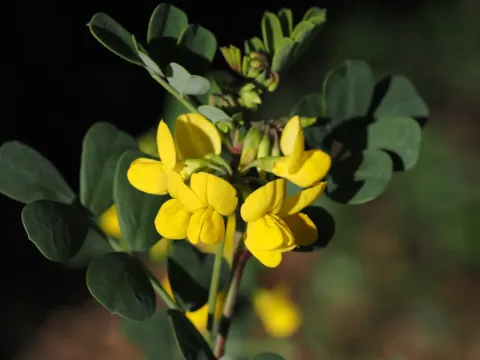
Shrubby scorpion-vetch
Coronilla valentina
Shrubby scorpion-vetch (Coronilla valentina) is a perennial leguminous shrub native to the Mediterranean basin. As a member of the Fabaceae family, it is highly valued for its symbiotic relationship with nitrogen-fixing bacteria, which enriches the soil with essential nutrients.
What the section contains
Shrubby scorpion-vetch
The plant thrives in warm, temperate climates and requires plenty of sunlight for robust growth. It is particularly well-adapted to Mediterranean environmental conditions, where it often grows on rocky, limestone-based, or well-drained alkaline soils.
Regarding soil management, Coronilla valentina prefers substrates with excellent drainage properties. It is highly intolerant of waterlogged conditions, which can lead to root system decay, especially during cooler and humid seasons.
Due to its deep root architecture, the plant exhibits remarkable drought tolerance. This trait makes it an excellent candidate for landscape restoration, erosion control on slopes, and low-input agricultural systems in arid or semi-arid regions.
Beyond its utility as a soil improver, the species is an important nectar source for pollinators. Its inclusion in agricultural landscapes helps support local biodiversity while maintaining a stable ground cover that protects the soil surface from wind and water erosion.
The primary threats to Coronilla valentina involve fungal pathogens linked to moisture excess. Root rot and collar rot are common occurrences if the soil drainage is inadequate or if the planting density is too high, leading to poor air circulation.
Pest pressures are similar to those of other legumes, with aphids and various species of weevils being the most common culprits. These insects target soft tissue and flowering buds, which can significantly reduce the potential yield of seeds.
Integrated pest management strategies are essential for maintaining healthy stands. This includes crop rotation, avoiding over-fertilization with nitrogen, and implementing mechanical weed control to reduce stress on the crop during the establishment phase.
Fungal leaf spots can also occur during humid periods, potentially defoliating the plant if left unchecked. Proper spacing and selecting sites with good wind exposure significantly reduce the humidity levels around the foliage, lowering infection risks.
Regular scouting of the fields is necessary to detect early signs of infestation or disease. By implementing timely interventions and ensuring optimal growing conditions, farmers can maximize the lifespan and productivity of their scorpion-vetch stands.