
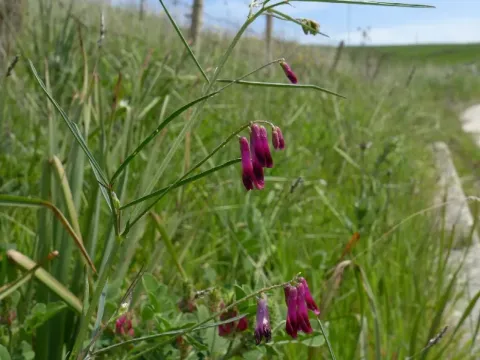
Sicilian vetch
Vicia sicula
Sicilian vetch (Vicia sicula) is an annual leguminous plant of the Fabaceae family that plays a significant role in Mediterranean agro-ecosystems. Known for its hardiness, this species is increasingly recognized for its potential in sustainable forage production and soil improvement.
What the section contains
Sicilian vetch
The optimal sowing time for Sicilian vetch generally falls in autumn, allowing the plants to establish a robust root system before the onset of colder weather. Early establishment ensures a strong competitive advantage against weeds and promotes rapid biomass accumulation in the early spring.
In regions with milder climates, spring sowing is also a viable option, provided that the soil conditions permit early fieldwork. It is essential to sow as soon as the soil is workable to maximize the vegetative growth phase before high temperatures induce flowering.
Sowing density is determined by the intended use of the crop, whether for hay, grazing, or green manure. Row sowing is preferred to ensure uniform distribution and ease of mechanical maintenance, typically requiring a seed rate tailored to local environmental conditions.
Placement depth for seeds is usually between 3 and 5 centimeters. Proper soil-to-seed contact is crucial for success, often achieved through light rolling immediately after seeding to ensure optimal capillary water movement for germination.
Sicilian vetch is well-adapted to a range of soil types, particularly favoring well-drained, lime-rich, or stony soils. Its ability to thrive in poor-quality substrates makes it a versatile candidate for marginal land improvement in its native range.
The crop demonstrates significant drought tolerance compared to many other vetch species, allowing it to maintain productivity in regions with intermittent rainfall. However, like most legumes, it is highly sensitive to waterlogged conditions, which can lead to root diseases.
Soil pH should ideally be neutral or slightly alkaline for optimal activity of root-nodulating bacteria. These symbiotic organisms are vital for nitrogen fixation, which significantly reduces the need for external nitrogen fertilizers during the growing season.
Temperature plays a critical role in the development cycle of Vicia sicula. It prefers mild temperatures and may undergo premature senescence if exposed to severe heat stress. Providing shelter from strong, desiccating winds is beneficial for preserving the plant's succulent foliage.
Effective management involves maintaining low weed pressure during the initial growth stages. Once established, the dense growth habit of Sicilian vetch creates a canopy that suppresses most invasive weeds, thereby reducing the need for chemical intervention.
Disease pressure on Sicilian vetch primarily includes various leaf spots and root rots, especially under high humidity or poor drainage. Using high-quality, certified seeds is the first line of defense against these seed-borne and soil-borne pathogens.
Insect pests, such as aphids and leaf-eating beetles, can cause economic damage if their populations peak during critical growth phases. Integrated pest management, including monitoring and biological control, is recommended over the prophylactic use of pesticides.
Crop rotation is a fundamental practice to break the life cycle of specialized vetch pathogens and pests. Avoiding the planting of legumes on the same field more than once every three or four years is essential for maintaining soil health.
Preventative cultural practices, such as maintaining optimal plant spacing, facilitate proper airflow through the canopy, which significantly reduces the incidence of fungal diseases. Regular field scouting ensures the early detection of any emerging threats.
In cases of severe infestation, targeted pesticide application may be necessary, but this should be executed with caution to protect beneficial pollinators and natural enemies of the pests. Adherence to strict safety intervals before harvest is paramount.
The harvest for fodder occurs during the onset of flowering, which represents the point of maximum nutritional value. At this stage, the plant tissue is rich in crude protein and highly digestible, making it an excellent source of feed for ruminants.
For seed production, harvesting is conducted when the majority of the pods have turned dark and the moisture content in the seeds is reduced. Timely harvest is critical to avoid shattering, as the pods are prone to splitting upon reaching full maturity.
Hay production requires rapid drying to preserve the protein-rich leaves, which are the most valuable part of the plant. Mechanical tedding is commonly used to accelerate drying while minimizing the loss of brittle leaves during the process.
After harvest, seeds must be cleaned and stored in dry, cool conditions to prevent mycotoxin development and insect infestations. Proper storage conditions ensure high germination rates for future planting seasons.
When used as a green manure crop, Sicilian vetch is incorporated into the soil during its full bloom phase. This practice not only provides an influx of organic matter but also serves as an effective nitrogen source for the subsequent crop in the rotation.