
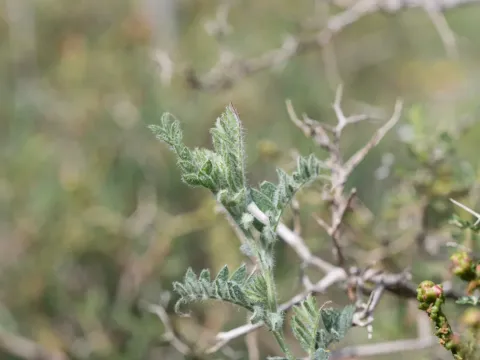
Sibthorp's vetch
Vicia sibthorpii
Sibthorp's vetch (Vicia sibthorpii) is a legume species of interest for forage production due to its nutritional qualities. The sowing process typically begins in early spring, once the soil has warmed sufficiently to ensure rapid germination.
What the section contains
Sibthorp's vetch
Seeds should be planted at a depth of 3 to 5 centimeters, depending on the soil texture, ensuring good soil-to-seed contact. Proper row spacing is essential to prevent overcrowding and allow for adequate airflow between plants.
In regions with cooler climates, spring sowing is preferred to take advantage of soil moisture before the onset of summer heat. Adequate seedbed preparation is vital to eliminate large clods and create a uniform surface for planting.
The application of proper sowing rates is crucial to achieve the desired plant density. Excessive density can increase competition for nutrients and light, while too low density may lead to weed infestation.
Post-sowing rolling is recommended to compact the soil slightly, which facilitates moisture uptake by the seeds and ensures a more uniform emergence across the field.
This crop thrives in fertile, well-drained loamy or sandy-loam soils. It is sensitive to waterlogging, so areas with poor drainage should be avoided to prevent root rot and ensure optimal development of the root system.
Vicia sibthorpii prefers a temperate climate and is generally resilient to moderate temperature fluctuations. However, it requires sufficient moisture, especially during the stages of early growth and flowering, to maintain productivity.
Soil fertility management should focus on phosphorus and potassium levels, as these elements are critical for healthy legume growth. The plant is capable of atmospheric nitrogen fixation provided that the soil contains suitable rhizobia bacteria.
Sunlight exposure is a significant factor for biomass accumulation; therefore, open fields that are not shaded by trees or buildings are ideal for cultivation. Proper weed management is also necessary during the early stages of establishment.
The soil pH should ideally be neutral or slightly acidic. If the soil is too acidic, liming may be necessary to optimize nutrient availability and promote the activity of nitrogen-fixing bacteria.
The yield of green biomass depends heavily on site-specific factors such as soil quality, climate, and the level of management. With optimal conditions, Sibthorp's vetch can produce high-quality forage rich in protein.
Seed production requires careful monitoring, as the pods may shatter if harvested too late. Harvesting at the correct maturity stage is key to maximizing the quantity and quality of the seeds recovered.
Balanced fertilization and weed control during the growing season significantly influence the final yield. Providing sufficient macro- and micronutrients during the peak growth phase enhances biomass production.
Crop rotation practices can help maintain long-term yield stability. By incorporating this legume into a rotation, the soil structure and nutrient content are naturally improved for subsequent crops.
Yield estimates are typically conducted by harvesting sample plots and calculating dry matter content. Analysis of the nutritional profile, particularly the crude protein, helps assess the value of the harvested material.
Fungal diseases like anthracnose and various types of rots are the most common threats to the health of the crop. These pathogens tend to flourish in humid conditions, necessitating proper field ventilation and seed treatments.
Pests such as pea weevils or aphids can cause significant damage to young shoots and leaves. Regular scouting is essential to identify early pest infestations and implement corrective actions before yield loss occurs.
Weed competition is a significant concern during the initial phase of development. If not managed properly, weeds can deprive the vetch of essential resources, leading to stunted growth and reduced overall quality.
Integrated pest management (IPM) strategies, including the use of resistant varieties and natural predators, are recommended to minimize the reliance on chemical pesticides and promote an eco-friendly farming environment.
Monitoring the moisture levels and avoiding over-irrigation can also help prevent the spread of soil-borne diseases. Maintaining healthy soil biological activity is an important part of natural disease suppression.
For high-quality forage, the harvest should take place at the early flowering stage. This is when the plant's nutritional profile, particularly the protein content, is at its peak and the stems are still relatively tender.
The harvesting process involves mowing the biomass and allowing it to wilt before collection. Proper handling is required to minimize leaf loss, as the leaves contain the highest concentration of nutrients.
Seed harvesting should be performed when the majority of pods are mature but before widespread shattering occurs. Mechanical harvesting needs precise setting to avoid damaging the seed coat during the threshing process.
Post-harvest storage requires well-ventilated areas to prevent mold growth in the grain or forage. Proper drying to reach a safe moisture level is mandatory to maintain quality during storage.
Crop residues left after the main harvest can be incorporated back into the soil as organic matter. This practice contributes to soil organic carbon sequestration and improves fertility for future cultivation cycles.