
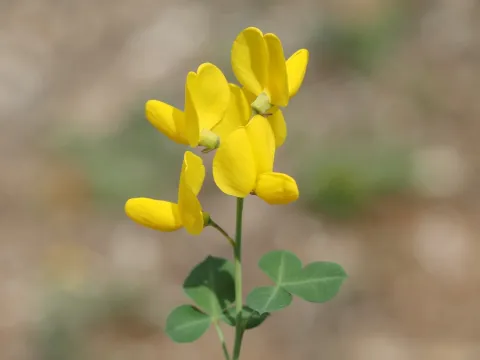
Sessile-leaved broom
Cytisus sessilifolius
Sessile-leaved broom, scientifically known as Cytisus sessilifolius, is a member of the Fabaceae family. This ornamental shrub is native to Southwestern Europe and is highly valued for its striking yellow flowers that appear in dense, terminal clusters during late spring.
What the section contains
Sessile-leaved broom
In terms of agricultural requirements, this species thrives in poor, well-draining soils. It is particularly well-suited for sandy or rocky substrates and exhibits an excellent tolerance for dry conditions once the root system is fully established.
Full sun exposure is mandatory for this plant to maintain its characteristic compact shape and abundant flowering. Partial shade should be avoided as it leads to sparse foliage and weak, elongated branches that are prone to breakage.
Climate adaptation is a key feature of this crop. While it is hardy in Mediterranean-like climates, in colder regions, it requires protection from desiccating winter winds. Good air circulation is essential to prevent moisture accumulation around the base.
Maintenance involves routine pruning to ensure the shrub remains vigorous. By cutting back the current season's growth after flowering, the gardener encourages dense branching and better flower bud formation for the following year.
Cytisus sessilifolius is susceptible to powdery mildew, a fungal disease that thrives in humid environments with limited airflow. Affected plants may show stunted growth and premature leaf drop.
Pests such as aphids and broom moths can cause significant damage to the floral buds and young shoots. Monitoring for these pests during the active growth period is crucial for maintaining plant health.
Chemical control measures should be applied selectively. For aphids, insecticidal soaps or systemic treatments are often sufficient if the infestation is detected early in the season.
To mitigate disease risks, avoid overhead watering, which increases leaf surface moisture. Instead, use drip irrigation if supplemental watering is necessary during prolonged dry spells.
Maintaining a mulch layer can help regulate soil moisture and temperature, but ensure the mulch does not directly touch the stem to prevent collar rot.