
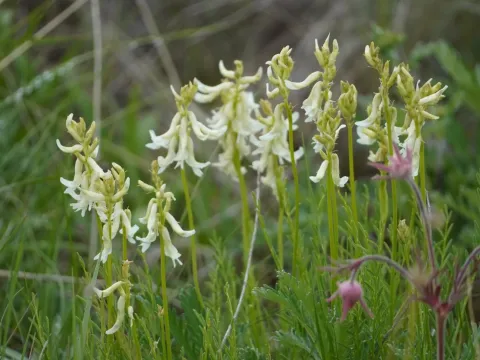
Sheldon's milkvetch
Astragalus sheldonii
Sheldon's milkvetch is a perennial legume that requires careful planning of sowing dates to ensure proper establishment during its first vegetative season.
What the section contains
Sheldon's milkvetch
The optimal time for planting is early spring when soil temperatures stabilize at approximately 8–10 degrees Celsius, facilitating seed germination.
Given the hard coat of the seeds, scarification or high-quality grading may be necessary to ensure uniform germination across the field.
The recommended planting depth is 1.5 to 2 centimeters to provide sufficient soil moisture while preventing the seeds from being buried too deep.
In regions with long growing seasons, it is possible to achieve successful establishment if moisture levels are managed during the initial sprouting phase.
This crop is highly valued for its adaptation to arid and semi-arid conditions, showing remarkable drought resistance compared to other forage legumes.
It performs best on well-drained, sandy, or stony soils where the roots are not subjected to prolonged saturation or high water tables.
The plant thrives in full sun, requiring exposure to maintain high photosynthetic activity and promote the development of its hardy root system.
Soil pH levels should ideally be neutral to slightly alkaline, which supports the symbiotic relationship with nitrogen-fixing bacteria necessary for plant health.
Adequate levels of phosphorus and potassium in the soil during the establishment phase contribute significantly to the plant's overwintering capabilities.
Root rot diseases are the most frequent concern, particularly in poorly drained soils where excess moisture promotes the development of fungal pathogens.
Insect pests, such as weevils, pose a risk to young plants by feeding on foliage and the growing points, potentially stunted initial growth.
Integrated pest management strategies are recommended, focusing on crop rotation and the use of pest-resistant cultivars to reduce the need for chemicals.
Fungal leaf diseases like powdery mildew can appear in humid conditions, necessitating proper field spacing to ensure adequate air circulation.
Good agricultural practices, such as preventing excessive weed density, help mitigate the risk of habitat formation for various agricultural pests.