
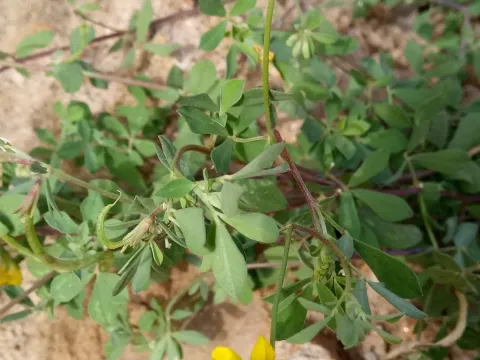
Sickle-fruited trefoil
Lotus drepanocarpus
Lotus drepanocarpus is a persistent perennial legume gaining attention for its forage potential in various agricultural systems. Sowing is typically carried out in early spring when soil temperatures reach stable growth levels.
What the section contains
Sickle-fruited trefoil
Because the seeds are relatively small, precise depth control is essential during planting to ensure uniform emergence. A seeding depth of 1.5 to 2 cm is recommended for optimal germination success.
Seedbed preparation should involve creating a fine, firm surface to encourage good seed-to-soil contact. Rolling the field after sowing can significantly enhance moisture retention around the seeds.
The standard seeding rate for this species is approximately 10-12 kg per hectare when sown in monoculture. In forage mixtures, this rate can be adjusted based on the compatibility with companion grasses.
Late summer sowing is possible in regions with mild autumns, provided there is adequate soil moisture to establish the seedlings before the onset of winter dormancy.
This crop is recognized for its impressive adaptability to diverse environmental conditions, including moderate drought stress. It thrives in well-lit areas where sunlight availability is maximized.
Regarding soil preferences, Lotus drepanocarpus performs best in well-drained loam or sandy loam soils. It shows good tolerance for varying pH levels and can survive in moderately nutrient-poor soils.
As a legume, it maintains a symbiotic relationship with nitrogen-fixing bacteria. This biological nitrogen fixation is a key benefit, as it enriches the soil and supports the growth of surrounding vegetation.
The plant possesses a deep and branched root system, allowing it to remain productive even during periods of low rainfall. This feature makes it highly suitable for sustainable pasture improvement.
The species demonstrates good resistance to cooler temperatures, enabling cultivation across a wide range of climatic zones. Optimal growth occurs within a temperate climate profile.
Yield stability is one of the primary advantages of this species, as it maintains consistent production levels over several years of harvest. Depending on rainfall, two to three cuts per season are achievable.
Green matter yields are competitive with other common forage legumes, providing high-quality protein-rich feed. Proper management practices significantly improve both biomass production and nutritional value.
Seed production requires careful monitoring of the pod maturation process. With appropriate harvesting techniques, consistent yields of high-quality seeds can be obtained for future planting.
The recovery rate after mowing is excellent, provided the harvest height is kept within recommended parameters. This allows for frequent use of pastures without damaging the stand's longevity.
Integrating balanced fertilization—focusing on phosphorus and potassium—can lead to significant increases in annual forage production and overall stand vigor.
Common fungal diseases, such as leaf spot and rust, can occur under conditions of high humidity or poor field drainage. Improving air circulation within the stand is a crucial preventive measure.
Pest management focuses primarily on controlling weevils that damage foliage and developing pods. Crop rotation and maintaining a healthy plant stand are effective ways to minimize these threats.
Weed competition during the establishment phase is the most critical threat to the success of a new seeding. Mechanical weeding or inter-row cultivation is often necessary to ensure the crop takes root.
Overgrazing poses a significant risk to the plant's long-term persistence in a field. Allowing the plants time to recover their root reserves is essential for their survival through multiple seasons.
The implementation of integrated pest management practices helps maintain the balance of the ecosystem while reducing reliance on chemical control methods.
For high-quality forage, the ideal harvest time is the early flowering stage. Cutting at this time ensures the best balance between protein content, digestibility, and overall biomass volume.
When producing hay, rapid drying is essential to prevent nutrient leaching and preserve the green color. Properly cured hay retains its nutritional profile significantly longer during storage.
Mowing should be performed at a height of 6-8 cm to protect the crown and growing points. This practice is vital for ensuring rapid regrowth of the plants following the harvesting process.
Seed harvesting should be performed once the pods have darkened but before they shatter naturally. Specialized harvesting equipment is often used to minimize losses during this stage.
After the harvest, seeds should be cleaned and stored in cool, dry conditions to maintain viability for the next planting season. Proper storage prevents early degradation of seed quality.