
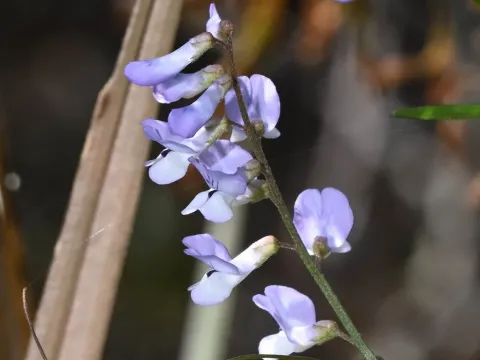
Sharp-leaf vetch
Vicia acutifolia
Sharp-leaf vetch (Vicia acutifolia) is a legume species valued in agriculture for its ability to produce high-quality forage and improve soil fertility through nitrogen fixation. It is widely cultivated in various climatic zones as an annual or biennial crop.
What the section contains
Sharp-leaf vetch
The optimal sowing time for the crop occurs in early spring once the soil temperature consistently reaches 5–8 degrees Celsius. Early planting ensures that the seedlings establish deep roots before the onset of summer heat.
Seeding rates are determined by soil fertility and the intended use of the crop. Standard row planting with a spacing of 15 to 20 centimeters is recommended to ensure optimal development of each plant and sufficient airflow through the canopy.
Seeds should be sown at a depth of 3 to 5 centimeters. Proper soil contact is crucial for germination, and light harrowing after sowing helps to cover the seeds and preserve soil moisture during the critical establishment phase.
For best results, integrating vetch into a crop rotation with cereals is advisable. This practice helps to manage soil nutrients and breaks the cycle of soil-borne diseases that are specific to the legume family.
This crop prefers fertile loamy or sandy loam soils with a neutral pH level. It does not tolerate waterlogged conditions, so choosing a well-drained site is essential for achieving high yields and healthy plant growth.
Sharp-leaf vetch exhibits good cold tolerance, making it suitable for regions with cool spring and autumn seasons. Its ability to withstand minor frosts allows for a flexible planting schedule in varying temperate environments.
Symbiosis with nitrogen-fixing bacteria is key to the plant's nutritional success. In fields where vetch has not been grown recently, inoculating the seeds with specialized bacterial cultures can significantly boost plant growth and yield.
While the plant is moderately drought-tolerant, consistent moisture during the flowering phase is essential for biomass production. Providing sufficient water during the critical growth stages ensures a succulent and nutritious harvest.
Phosphorus and potassium fertilization is beneficial for strengthening the plant's structure. Nitrogen fertilizer usage should be kept low to encourage the plant to rely on symbiotic nitrogen fixation, which is both economically and ecologically sound.
Common diseases affecting Vicia acutifolia include Ascochyta blight and rust. Crop rotation and the use of certified, clean seed are the primary methods for managing these pathogens and ensuring a healthy stand.
Pests such as pea weevils and aphids can cause economic damage if not managed properly. Early detection through regular field scouting is vital for implementing timely control measures, including biological or chemical treatments.
Root rot, often caused by excessive soil moisture, can be a major issue. Proper soil preparation and avoiding the compaction of fields during cultivation help to minimize the risk of developing these fungal problems.
Integrated Pest Management (IPM) practices are highly recommended to balance the need for crop protection with environmental stewardship. Using resistant cultivars is the most sustainable approach to controlling recurring infections.
Monitoring the field for signs of nutrient deficiency or insect infestation allows farmers to act before a problem becomes severe. Swift action ensures that the overall crop quality and yields are protected from significant declines.
For forage production, the crop should be harvested during the early flowering stage. This is when the plant reaches its peak nutritional value, providing a high concentration of proteins and digestible fiber for livestock.
When harvesting for hay, careful drying is required to prevent leaf shatter. Since the majority of nutrients are contained in the leaves, using specialized mowing and tedding equipment is recommended to minimize harvest losses.
Seed harvest should be timed when the majority of pods turn dark and dry. Careful handling during the threshing process is necessary to prevent seed damage and loss, ensuring high viability for the following season.
Post-harvest conditioning of seeds includes drying them to a moisture content of 12–14%. Proper storage in cool, dry, and ventilated conditions is essential to maintain high germination rates over long periods.
By-products of the harvest, such as straw, possess good nutritional profiles and can be utilized as supplementary fodder for ruminants, making the entire cultivation process highly efficient and productive.