
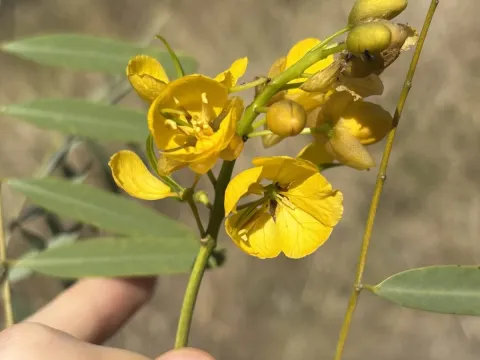
Cassia pleurocarpa
Cassia pleurocarpa
Sowing Cassia pleurocarpa requires careful preparation, as the seeds typically possess a hard seed coat that necessitates scarification to ensure uniform and rapid germination.
What the section contains
Cassia pleurocarpa
The optimal planting time is during the period of consistent warmth, allowing the soil temperature to remain stable for effective root system establishment.
Seeds should be sown at a shallow depth of approximately 1 to 2 centimeters in well-aerated soil to ensure they receive enough moisture while maintaining oxygen exchange.
Adequate spacing between rows is essential for this plant to accommodate its growth habit, as it tends to develop a spreading, bush-like structure as it matures.
The implementation of modern row-seeding techniques can improve management efficiency, particularly regarding weed control and harvesting of the mature crop.
Cassia pleurocarpa is a member of the Fabaceae family, originating from the arid zones of Australia, which dictates its high tolerance for heat and dry conditions.
The crop thrives in sandy and light-textured soils that provide excellent drainage, as the species is highly susceptible to root damage in waterlogged environments.
It is classified as an extremely drought-hardy plant, making it a potentially valuable asset for agriculture in semi-arid regions where water resources are restricted.
The plant requires full sun exposure to flourish and maintain its metabolic functions, meaning that it should be located in open fields with no canopy competition.
As a legume, it has the biological capability to engage in nitrogen fixation, which contributes to the improvement of soil nitrogen levels, naturally enhancing site fertility.
The primary concern for growers is the potential for root rot diseases, which occur almost exclusively when soil moisture levels are not managed correctly.
Leaf-chewing insects can occasionally pose a threat during the early vegetative stages, causing localized damage to the foliage that may affect overall plant vigor.
Humidity-related fungal issues may emerge in areas with poor air circulation, potentially manifesting as mildew or spotting on the leaf surfaces.
Sucking insects, such as aphids, can occasionally infest new growth, leading to stunted shoots and reduced photosynthetic efficiency if left untreated.
An integrated pest management approach, including scouting and selective biological control, is recommended to keep pest populations below the economic injury level.