
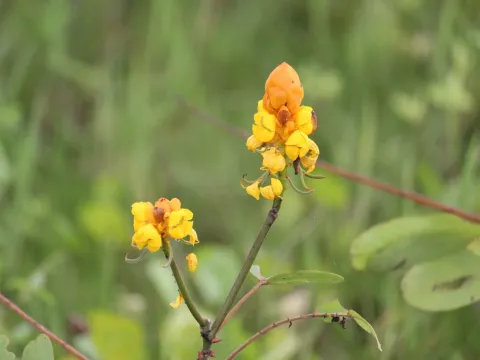
Cassia reticulata
Cassia reticulata
Cassia reticulata is a perennial tropical shrub. In its natural range, seeds are sown at the beginning of the rainy season, when soil temperatures are consistently high to ensure rapid germination.
What the section contains
Cassia reticulata
Seeds require scarification before planting due to their hard coat. They should be sown at a depth of 1–2 centimeters in well-drained, prepared soil to maximize the emergence rate.
Vegetative propagation via cuttings is highly effective for commercial production. Cuttings are typically rooted in shaded nursery beds until they develop a robust root system capable of independent growth.
Planting density is determined by the intended yield: high-density planting is preferred for biomass, while wider spacing (up to 2 meters) is used for seed production to allow for better air circulation.
Newly planted seedlings require consistent moisture during the first few weeks of establishment to ensure deep rooting and survival against early environmental stress.
As a member of the Fabaceae family, Cassia reticulata thrives in full sun and warm, humid tropical environments. It is highly sensitive to frost and must be grown in frost-free regions.
The crop adapts to various soil types but performs best in fertile, well-drained loams. It is critical to avoid waterlogged sites, as stagnant water is detrimental to the plant's root health.
The ideal soil pH range for this species is 5.5 to 7.0. Like many legumes, it is capable of atmospheric nitrogen fixation, which contributes to soil fertility and sustainable land management.
While the plant shows some tolerance to short dry spells, it requires regular rainfall or irrigation for optimal vegetative growth and leaf biomass production throughout the growing season.
Cassia reticulata is a fast-growing species that can reach heights of 5–7 meters. Its rapid expansion makes it a valuable species for reforestation and agroforestry systems in the tropics.
The primary harvest yield for Cassia reticulata is its leafy biomass, which is utilized in pharmacological research and traditional medicine. Strategic pruning can stimulate vigorous branching and multiple harvests.
Maximum productivity is typically achieved by the second year of growth. Consistent nutrient management and timely pruning cycles are key factors in maintaining high annual biomass output.
Seed yield depends on pollinator activity. The plant's bright yellow flowers are highly attractive to bees and other insects, which are essential for successful pod development and seed set.
Beyond commercial extraction, the plant is often valued for the organic matter and nitrogen it returns to the soil, acting as a natural green manure for subsequent agricultural rotations.
Under optimal field conditions, yields can reach 10–15 tons of dry matter per hectare annually, depending on irrigation practices and the specific fertility of the plantation soil.
Cassia reticulata is generally resilient, but it can suffer from root rot if drainage is poor. Ensuring that soil does not remain overly wet is the primary defense against these fungal threats.
Leaf-eating caterpillars are the most common pest, as they can rapidly defoliate large sections of the plant, significantly reducing the photosynthetic efficiency and biomass yield.
Fungal diseases like powdery mildew may occur in high-humidity conditions with restricted air movement. Proper plant spacing is essential to mitigate the spread of these pathogens.
Sap-sucking insects, such as aphids and whiteflies, may colonize young shoots, stressing the plant and potentially vectoring viral infections that can stunt growth.
- Root rot pathogens (Pythium and Phytophthora)
- Lepidopteran larvae (caterpillars)
- Powdery mildew
- Aphids and whiteflies
Harvesting leafy biomass is conducted through selective pruning of stems. The most valuable medicinal сырьё (raw material) consists of young, tender leaves that contain high levels of active compounds.
Harvesting should be done during dry weather to ensure the quality of the raw material. Once harvested, the leaves should be dried in shaded, well-ventilated areas to preserve their chemical profile.
Seed collection occurs when the pods turn deep brown. Timing is critical, as the pods are prone to dehiscing (splitting open) when overly dry, which can lead to significant seed loss in the field.
For large-scale operations, mechanized hedge trimmers are often employed to harvest biomass efficiently, provided the plantation layout allows for the access of such equipment.
Post-harvest, a sanitizing trim is recommended to remove damaged branches, encourage uniform regrowth, and maintain the health of the plant for the next production cycle.