
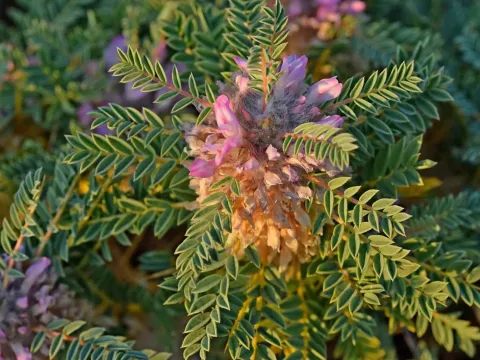
Astragalus thracicus
Astragalus thracicus
Astragalus thracicus is a perennial herbaceous plant belonging to the Fabaceae (Leguminosae) family. It is a Balkan endemic species primarily found in the rocky and dry habitats of Bulgaria, showcasing significant adaptation to harsh environments.
What the section contains
Astragalus thracicus
The plant is highly resilient to continental climate extremes, specifically thriving in drought-prone areas where other crops might fail. Its biological structure allows it to withstand intense sun exposure and temperature fluctuations typical of its natural range.
To cultivate this species, well-drained, porous, and preferably calcareous soils are essential. Heavy or clay-based soils that retain moisture for extended periods are unsuitable, as they lead to root decay, which is the primary factor limiting the plant's growth in certain regions.
Full sun is a critical requirement for the optimal development of Astragalus thracicus. The plant displays a compact growth habit, characterized by a deep taproot that helps it access nutrients and moisture in rocky substrates that are often inaccessible to shallower-rooted species.
Beyond its botanical characteristics, it plays a vital role in nitrogen fixation. By forming symbiotic relationships with soil bacteria, the plant enriches the nitrogen content of the soil, making it a potentially useful species for soil stabilization and landscape restoration efforts.
Sowing should take place in early spring after the risk of ground frost has passed. Due to the hard seed coat, pre-sowing treatments such as scarification or cold stratification are recommended to break dormancy and ensure uniform and rapid germination rates.
The seeds should be planted at a shallow depth of 1 to 2 cm, ensuring good seed-to-soil contact. Proper spacing between rows is necessary to prevent competition for light and water, with a recommended distance of at least 45 cm to allow for adequate ventilation of the plant canopy.
The main threats to Astragalus thracicus are related to fungal infections caused by excessive humidity or poor soil drainage. Root rot and damping-off disease are common issues in poorly managed cultivation sites where air circulation is restricted.
Pest management should focus on monitoring for weevils and aphids, which can damage the developing foliage and seeds. While the species is hardy in the wild, cultivation requires careful attention to sanitation and proper watering practices to mitigate these common agricultural risks.