
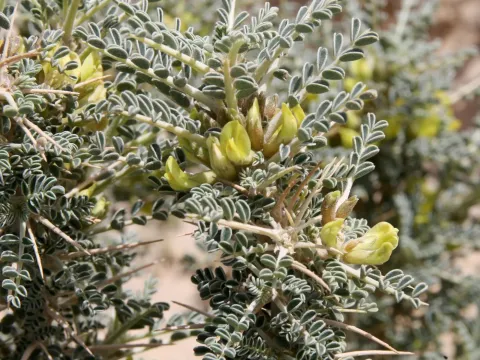
Astragalus trigonus
Astragalus trigonus
Astragalus trigonus is a perennial herbaceous plant belonging to the Fabaceae family. This species is known for its remarkable resilience in arid and semi-arid environments, making it a subject of interest for agricultural systems focusing on water-limited areas.
What the section contains
Astragalus trigonus
The plant features a deep taproot system, which allows it to access moisture levels unavailable to shallower rooted crops. This biological trait, combined with nitrogen-fixing capabilities, makes it an excellent candidate for soil restoration and conservation projects.
In terms of soil requirements, it thrives in well-drained, sandy-loam, or calcareous soils. It possesses a high tolerance for soil salinity, which is a significant advantage in regions where soil degradation due to salt accumulation is a primary challenge.
Climatic requirements involve high solar radiation and warmth, which trigger vigorous growth during the spring and early summer. Proper site selection must avoid low-lying areas prone to waterlogging, as the species is sensitive to root rot under anaerobic conditions.
The economic value of this crop lies in its biomass production for livestock feed. It provides a reliable source of protein and mineral content, contributing to the nutritional balance of grazing animals throughout the vegetative cycle.
Disease outbreaks in this species are often linked to fungal pathogens like powdery mildew and rust. Effective management focuses on maintaining crop vigor and ensuring good airflow between plants to prevent humidity buildup.
Insect pests, including various aphids and leaf-feeding larvae, can impact yield and foliage quality. Integrated pest management strategies, utilizing both biological controls and targeted application, are necessary to mitigate potential losses.
Weed management is most critical during the establishment year. As the crop develops, it establishes a dense canopy that helps suppress competing flora, but early intervention through mechanical cultivation is often required.
To reduce disease pressure, crop rotation practices should be strictly observed. Avoiding repeated planting of legumes on the same site prevents the buildup of soil-borne pathogens that commonly affect the Fabaceae family.
Proper harvesting techniques, such as avoiding overly intensive mowing that weakens the plant's recovery capacity, are essential for maintaining a healthy and productive stand over several consecutive years.