
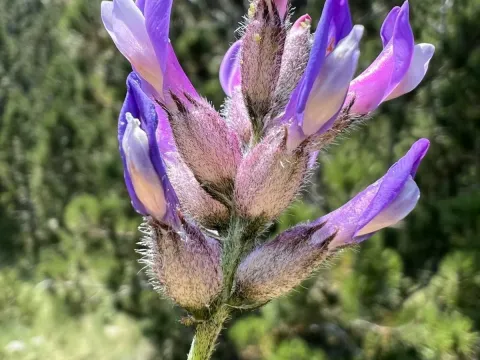
Astragalus vesicarius
Astragalus vesicarius
Astragalus vesicarius, commonly known as bladder milkvetch, is a perennial herbaceous plant belonging to the Fabaceae family. Establishing a crop requires careful attention to seed preparation, as the seeds possess a hard seed coat. Scarification or cold stratification is often necessary to break dormancy and ensure uniform germination during the spring sowing season.
What the section contains
Astragalus vesicarius
Sowing should take place once the soil has warmed sufficiently, typically in early spring, at a depth of 2 to 3 centimeters. Proper soil-to-seed contact is essential for successful establishment. Row spacing should be maintained to allow for adequate mechanical weed control and to facilitate air circulation throughout the growing season.
This species is well-adapted to arid and semi-arid environments, demonstrating remarkable drought tolerance. It thrives in open, sunny locations with direct sunlight. Its deep taproot system allows the plant to extract moisture from deep soil layers, making it a robust option for regions where water scarcity is a significant constraint for agriculture.
The plant prefers well-drained, sandy or light loamy soils with a neutral to slightly alkaline pH. Good soil aeration is crucial for the development of nitrogen-fixing nodules, which contribute to soil fertility. Heavy, waterlogged clay soils are unsuitable and should be avoided to prevent root diseases and ensure healthy plant development.
Astragalus vesicarius is highly resilient to temperature fluctuations, surviving both harsh winters and intense summer heat. This adaptability makes it suitable for ecological restoration projects on degraded land. By improving soil structure and preventing erosion, the plant plays a vital role in maintaining the stability of local ecosystems.
The primary agricultural use of bladder milkvetch is as a high-quality forage crop for livestock. It is valued for its protein content and ability to grow in poor soils where other legumes might fail. Yields vary depending on local rainfall and soil quality, but the crop provides reliable biomass production over several seasons if managed properly.
Beyond forage, the plant is studied for its medicinal properties due to the presence of secondary metabolites like saponins and flavonoids. Harvesting for pharmacological purposes requires careful timing, typically during the peak flowering stage when the concentration of bioactive compounds is at its highest level.
Like many legumes, this crop is susceptible to powdery mildew and various rust fungi, especially in conditions of high humidity or poor ventilation. Implementing a proper crop rotation and maintaining spacing between rows are effective management strategies to reduce the impact of these fungal pathogens and improve yield consistency.
Insect pests such as weevils can pose a threat by damaging the roots or feeding on developing seeds. Integrated pest management, including the use of trap crops and mechanical soil cultivation, is recommended. These practices help keep pest populations below the economic injury level without relying heavily on chemical inputs.
Harvesting for forage should occur when the plants are in full bloom to ensure the best balance between biomass volume and nutritional quality. Cutting should be performed at a height of approximately 8 to 10 centimeters, allowing the plant to regenerate effectively from the crown and maintain vigor throughout its lifespan.
For seed production, harvesting is timed when the majority of the pods have darkened, indicating maturity. Mechanical harvesting must be carefully calibrated to minimize shattering losses. Post-harvest, seeds should be dried to an appropriate moisture content to ensure long-term viability during storage until the next planting season.