
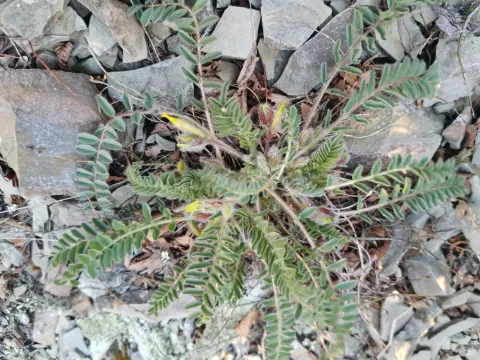
Astragalus utriger
Astragalus utriger
Sowing Astragalus utriger is optimally performed in early spring once the soil temperatures have consistently risen above the minimum germination threshold.
What the section contains
Astragalus utriger
The seeds possess a hard seed coat, necessitating pre-sowing scarification to ensure uniform germination and to reduce the duration of the emergence period.
A sowing depth of 2–3 centimeters is recommended, ensuring the seeds are placed in a zone with adequate moisture to support initial seedling development.
Seeding rates typically range between 8 and 12 kilograms per hectare, depending on the desired plant density and the specific purpose of the forage stand.
Precision planting or standard row seeding with spacing of approximately 30–45 centimeters promotes airflow and reduces competition between emerging seedlings.
Astragalus utriger is a perennial member of the Fabaceae family, well-adapted to the environmental stresses of arid and semi-arid steppe regions.
This species is highly drought-tolerant, relying on its deep and complex root architecture to access moisture and nutrients in challenging soil environments.
Optimal growth is observed in well-drained, light-textured soils where the plant can establish deep root systems without the risk of anaerobic conditions.
As a legume, it benefits from a symbiotic relationship with nitrogen-fixing bacteria, which allows it to thrive in soils that are relatively low in nitrogen content.
The species requires full sun exposure and performs poorly in shaded areas, highlighting its ecological preference for open, prairie-like habitats.
Forage yield in Astragalus utriger is influenced significantly by moisture availability during the critical periods of vegetative growth and early blooming.
Under favorable conditions, the species produces high-quality biomass that is rich in proteins and suitable for various livestock feeding requirements.
The persistence of the stand is a notable economic benefit, as a well-established field of Astragalus can produce for several years without needing reseeding.
Seed production requires meticulous management of harvest timing to avoid the natural dehiscence of pods, which can lead to significant yield losses in the field.
Integration into crop rotation systems improves overall soil fertility due to the plant's efficient nitrogen fixation and organic matter contribution.
Fungal pathogens represent the primary threat to the health of the stand, particularly during seasons characterized by high humidity and frequent precipitation.
Insect pests, such as weevils, can compromise both the plant's vegetative parts and the developing seed pods if not monitored during the growing season.
Invasive weed species pose a significant challenge during the initial establishment phase, requiring strategic mechanical cultivation to protect the crop.
Root rot diseases may develop in poorly drained soil zones, leading to reduced stand density and premature senescence of the perennial plants.
Integrated pest management strategies are crucial for maintaining long-term productivity and ensuring the health of the root system against soil-borne threats.
Harvesting for forage is ideally conducted at the peak of the flowering stage, ensuring an optimal balance between total biomass and nutrient quality.
Seed harvesting should be timed carefully when the pods show initial signs of drying to minimize shattering while ensuring the maturity of the seeds.
Modern harvesting machinery should be adjusted to account for the seed size and pod fragility, ensuring minimal mechanical impact during the threshing process.
Post-harvest cleaning is essential to remove chaff and other impurities, which facilitates better storage stability and reduces the risk of spoilage.
Storage facilities must provide a cool, dry environment to maintain seed viability and prevent the onset of mold and quality degradation over time.