
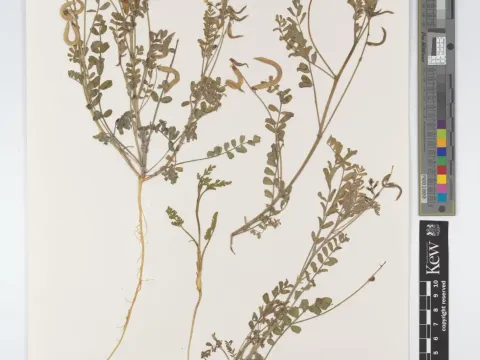
Astragalus trimestris
Astragalus trimestris
Astragalus trimestris is an annual leguminous plant (Fabaceae family) adapted to arid and semi-arid environments. Its lifecycle is finely tuned to survive in regions with limited rainfall and short growing periods.
What the section contains
Astragalus trimestris
The optimal sowing time begins in early spring once the soil temperature is sufficient for consistent germination. Proper seedbed preparation is vital to ensure that seeds are planted at an appropriate depth for optimal emergence.
Mechanical scarification of the seeds is often recommended to overcome seed coat dormancy. This simple pre-sowing treatment ensures a more uniform stand and higher crop establishment rates across the field.
Row spacing should be managed to optimize sunlight penetration and air circulation. Uniform distribution of plants prevents competition for water, which is a limiting factor in the natural habitats of this species.
Post-sowing rolling of the soil is advised to enhance the soil-to-seed contact. This practice promotes the capillary movement of moisture toward the seeds, significantly boosting germination success during dry weather spells.
This crop is highly prized for its drought tolerance. Its biological adaptation allows it to thrive in environments where typical forage legumes would struggle due to extreme heat and low moisture availability.
Well-drained soils are essential for the health of this species. It prefers sandy or loamy textures that allow for good root penetration and prevent the risk of waterlogging, which the plant is highly sensitive to.
Astragalus trimestris grows best in sunny, open locations. It requires high solar radiation to maximize photosynthesis and accumulate the biological compounds characteristic of the genus.
Regarding soil fertility, while it is adapted to poorer soils, nitrogen-fixing bacteria associated with its roots can enhance soil quality over time. Minimal phosphorus fertilization can support better root architecture and biomass yield.
The plant demonstrates significant tolerance to salinity, making it a potential candidate for land reclamation and soil rehabilitation projects in arid regions where irrigation water quality is suboptimal.
Fungal pathogens such as root rot and powdery mildew pose the greatest risk to crop health. These typically thrive when humidity levels in the canopy rise significantly due to poor ventilation or over-irrigation.
Insect pests, including aphids and various legume-feeding weevils, can cause damage by feeding on foliage and meristematic tissues. Regular scouting is the best approach to detect and manage these infestations before they reach economic threshold levels.
Weed competition during the seedling stage is a significant challenge for this crop. Early-stage weed management using inter-row cultivation helps the young plants gain enough strength to compete successfully throughout the season.
Integrated Pest Management (IPM) strategies are recommended to maintain field health. Using cultural practices, such as appropriate crop rotation, reduces the reliance on chemical pesticides and promotes long-term ecological balance.
Monitoring the field for mosaic patterns on the leaves is important as it may indicate viral infections. Because these viruses are often transmitted by aphids, maintaining a robust insect control program is essential for disease prevention.