
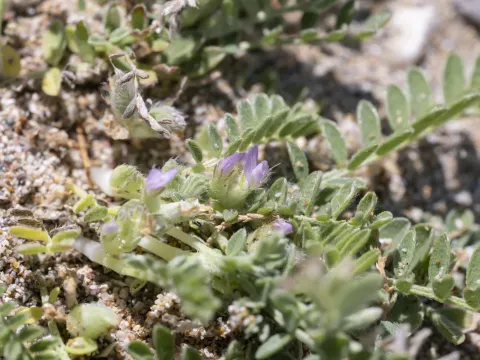
Astragalus sinaicus
Astragalus sinaicus
Astragalus sinaicus is a perennial herb belonging to the Fabaceae family, commonly known as the legume family. It is a highly specialized plant species evolved to thrive in the harsh, arid environments of the Sinai Peninsula and surrounding desert regions.
What the section contains
Astragalus sinaicus
The plant exhibits remarkable drought tolerance, which is facilitated by its deep taproot system capable of extracting moisture from significant depths. It is perfectly adapted to sandy and stony substrates that are typically low in organic matter.
Climate requirements include intense solar radiation and high ambient temperatures throughout the growth cycle. It is sensitive to frost and excess humidity, making it suitable only for specific arid or semi-arid climatic zones.
Regarding soil, Astragalus sinaicus prefers well-drained, alkaline, and even saline soils. Its ability to thrive in these conditions makes it a candidate for rehabilitating soils that are unsuitable for traditional crop cultivation.
From a biological standpoint, the species forms symbiotic relationships with rhizobia, enabling nitrogen fixation. This attribute is vital for increasing soil fertility in regions where nitrogen content is naturally depleted.
Root rot and crown diseases are the primary threats to the health of Astragalus sinaicus crops. These issues are almost always associated with excessive soil moisture or poor drainage, which trigger fungal infections.
Insect pests such as weevils and aphids can cause damage during the active growth phases. Weevils are particularly dangerous as they can destroy buds and young foliage, significantly impacting the biomass production.
Soil-borne nematodes pose a secondary threat, particularly in sandy soil types. These pests damage the root system, which hinders the plant's nutrient uptake and ability to fix atmospheric nitrogen efficiently.
Weed competition is a significant challenge during the seedling stage when the plant develops slowly. Establishing a clean field environment early on is essential for the successful development of the crop.
Preventative measures include the use of clean seeds and the avoidance of over-irrigation. Proper crop management and monitoring are necessary to identify early signs of infestation and prevent large-scale losses.