
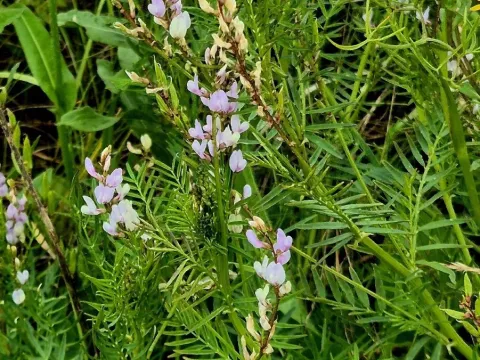
Astragalus sulcatus
Astragalus sulcatus
Astragalus sulcatus is a perennial legume species that belongs to the Fabaceae family. Known for its robust root system, it is recognized for its ability to adapt to various soil types, including those with high salinity, making it an excellent candidate for land reclamation and grazing systems.
What the section contains
Astragalus sulcatus
The ideal time for planting is during the early spring when the soil reaches an optimal workable state. In areas with mild winters, late autumn sowing is also a viable option, as it allows seeds to undergo natural stratification, leading to more uniform germination in the following season.
Preparation of the seedbed is crucial for success. Because the seeds are relatively small, they should be sown at a shallow depth of 1 to 3 centimeters. Proper soil compaction after sowing helps ensure adequate moisture retention around the seeds, which is vital for the initial sprouting process.
Seeding rates depend on the chosen method of cultivation and the intended use of the crop. For dense forage production, standard row sowing is recommended. In contrast, for seed multiplication plots, wider spacing is advised to improve air circulation and sunlight exposure for individual plants.
Young seedlings grow slowly, making the early stages of development vulnerable to weed competition. Effective weed control via mechanical inter-row cultivation is necessary during the first year to ensure that the young plants establish themselves successfully without being choked by weeds.
Astragalus sulcatus is highly sunlight-dependent and thrives best in open, sunny environments. Shaded areas significantly reduce its growth rate and overall biomass yield, so it should not be planted as an understory crop or in proximity to tall, competing vegetation.
One of its most notable characteristics is its impressive tolerance to drought and saline soil conditions. This makes it a valuable asset for agricultural production in regions where traditional forage grasses often fail to yield sufficient results due to harsh environmental factors.
The plant performs best in well-drained soils with a neutral or slightly alkaline pH. While it is naturally hardy and capable of growing in poorer soils, occasional application of phosphorus-rich fertilizers can significantly enhance root development and nitrogen fixation efficiency.
Temperature is rarely a limiting factor for this species, as it exhibits excellent cold hardiness. It is well-adapted to continental climates with wide temperature fluctuations, allowing it to survive through winter and initiate growth early in the spring season.
Water availability is essential during the emergence and early seedling stages. Once the deep taproot system is fully developed, the plant becomes highly resilient to dry spells, as it can access deeper reservoirs of soil moisture that are unavailable to shallower-rooted crops.
The primary use of Astragalus sulcatus is for high-quality forage production. It provides a dense, nutrient-rich biomass that is palatable to livestock, contributing to healthier herd development and higher productivity in extensive grazing operations.
Peak biomass yield is typically reached between the second and third years of growth. With proper rotational management, a single field can remain productive for several years, which effectively reduces the operational costs associated with annual soil preparation and replanting.
The plant also serves as an important melliferous crop. It produces high-quality nectar that attracts bees, thereby supporting local apiaries. This dual-purpose use makes it a highly sustainable choice for farmers looking to diversify their income through honey production alongside fodder.
Harvest timing is critical for maintaining feed quality. To maximize the nutritional value, it is best to harvest the biomass during the bud stage, just before the full bloom. Delaying the harvest leads to stems becoming overly fibrous, which reduces the digestibility for farm animals.
When producing seeds, farmers should monitor the pods carefully. Since seeds within the pods ripen unevenly, it is necessary to time the harvest accurately to avoid excessive seed shattering. Proper handling and drying are essential to maintaining seed viability for future planting seasons.
Like most legumes, Astragalus sulcatus is susceptible to fungal pathogens if grown under conditions of excessive soil moisture or poor aeration. Rust and leaf spot diseases are common concerns, particularly in humid climates or dense, poorly managed stands.
Insect pests such as weevils pose a significant threat to the plant's reproductive organs. These pests feed on flower buds and developing pods, which can drastically reduce seed production. Vigilant monitoring during the budding phase is necessary to mitigate these losses.
Root rot is a potential risk in heavy clay soils where drainage is suboptimal. To prevent this, fields should be selected based on their drainage capacity, and a clear crop rotation schedule should be strictly followed to minimize the buildup of soil-borne pathogens.
Integrated weed management is necessary as the plant may be sensitive to certain broad-spectrum herbicides. The best approach involves combining meticulous seedbed preparation with mechanical weeding to maintain a healthy stand while avoiding damage to the crop itself.
Given the plant’s importance as a bee forage, the use of chemical pesticides must be managed with extreme caution. Utilizing biological control agents is the preferred method for managing pest outbreaks, as it protects the population of pollinators essential for both honey production and crop yield.