
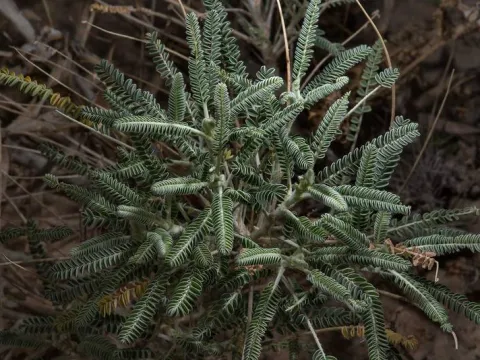
Astragalus sieberi
Astragalus sieberi
Astragalus sieberi is a perennial herbaceous plant belonging to the Fabaceae family, well-adapted to arid environmental conditions. In agricultural practice, sowing is typically conducted in early spring, once the soil temperature reaches 8–10 degrees Celsius, allowing the seeds to utilize soil moisture effectively.
What the section contains
Astragalus sieberi
The optimal planting depth is 2–3 centimeters, depending on soil texture. Planting too deeply can significantly reduce germination energy, leading to sparse plant stands during the first growing season.
To improve field emergence, seeds should undergo scarification, as their thick outer coat often prevents moisture absorption. Sowing is usually performed in rows with a spacing of 30–45 centimeters between them.
Under irrigated farming conditions, sowing dates can be shifted to autumn to allow for better root system development before the onset of summer heat. During the first year, the crop develops slowly, focusing primarily on establishing its root architecture.
Seeding rates are calculated based on seed viability, typically ranging from 6 to 10 kilograms per hectare. Astragalus sieberi integrates well with other drought-resistant grass species in mixed forage stands.
This species displays high ecological plasticity regarding soil conditions, although it prefers light sandy or loamy soils with good drainage. The plant does not tolerate waterlogging or high soil acidity, which can hinder its growth and nitrogen-fixing abilities.
As a classic xerophyte, the plant demonstrates remarkable tolerance to prolonged drought and extreme temperature fluctuations. It thrives in regions with low humidity where other fodder legumes often fail to survive.
High light intensity is crucial for the optimal development of Astragalus sieberi, so it is important to prevent competition from weeds during the early growth stages. Ample sunshine promotes high biomass accumulation and efficient photosynthesis.
Soils should be well-supplied with available phosphorus and potassium to stimulate the development of a robust taproot. Through symbiosis with rhizobia, Astragalus sieberi fixes atmospheric nitrogen, thereby improving overall soil fertility.
The ideal temperature range for active growth is between 20 and 30 degrees Celsius. The plant is well-adapted to the significant diurnal temperature variations characteristic of arid zones in the Middle East and Central Asia.
The agricultural productivity of Astragalus sieberi is highly dependent on moisture levels and the age of the stand. Under natural precipitation, green biomass yields can reach 8–12 tons per hectare, with significantly higher figures achieved under irrigation.
Maximum nutrient yield is attained by harvesting at the beginning of the flowering phase, when protein concentration and the content of bioactive compounds in the above-ground parts are at their peak.
Sustainable production can be maintained for 5–7 years with proper management and timely application of mineral fertilizers. Regular phosphorus supplementation promotes vigorous tillering and rapid regrowth after mowing.
Seed yield is a vital indicator of the crop's success. In favorable years, farmers can expect to harvest between 200 and 500 kilograms of seeds per hectare, making it a commercially viable choice for seed producers.
Astragalus sieberi is also a valuable honey plant, which enhances the total productivity of the agro-ecosystem by attracting pollinators and providing additional income from honey production.
Like most legumes, Astragalus sieberi is susceptible to root rot if soil moisture levels remain excessive. This disease often manifests as wilting of young shoots and discoloration of the root crown.
Among insect pests, weevils represent the most significant threat, as they feed on seeds during development, which can drastically reduce seed yield and quality.
Powdery mildew can affect the leaves during periods of high humidity or in overly dense stands, requiring timely preventive fungicide applications to prevent the spread of the infection.
Aphids often colonize the young tips of shoots, draining sap and stunting growth. Pest control is best achieved through integrated management strategies, including crop rotation and the timely removal of weeds.
Soil-dwelling pests, such as scarab beetle larvae, may damage young plantings by feeding on roots. An integrated pest management (IPM) approach helps minimize losses while reducing the need for chemical pesticides.
Harvesting for green fodder or hay is best performed during the peak flowering phase. Mowing should be conducted at a height of 7–10 centimeters to ensure healthy regrowth of the secondary foliage.
When producing hay, it is essential to ensure rapid drying to preserve the protein-rich leaves. Astragalus sieberi dries well and maintains its nutritional quality throughout the curing process.
Seed harvesting should occur when the pods turn brown and seeds become firm and develop their characteristic color. Delaying the harvest can result in significant seed shattering due to pod dehiscence.
Seed harvest is typically accomplished using combine harvesters, followed by post-harvest drying and cleaning. Proper storage at low moisture content is critical to prevent mold growth and maintain seed viability.
Post-harvest residues can be utilized as roughage for livestock or incorporated into the soil as green manure, providing organic matter and nitrogen for subsequent crops.