
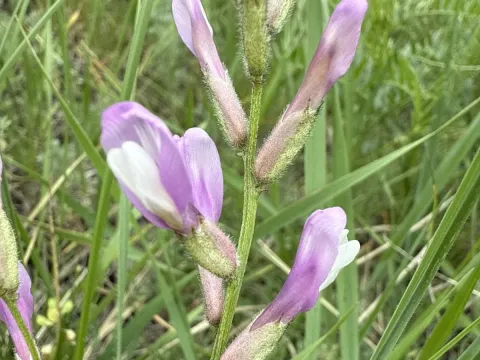
Astragalus macropus
Astragalus macropus
Astragalus macropus is a perennial herbaceous plant belonging to the Fabaceae (legume) family. In agricultural settings, it is valued as a productive forage crop that contributes to nitrogen fixation in the soil.
What the section contains
Astragalus macropus
The seeds possess a hard seed coat, making scarification essential before sowing to ensure uniform germination. Planting should be carried out in early spring once the soil temperature reaches 5–8 degrees Celsius.
The sowing depth is typically maintained between 1.5 to 3 centimeters, depending on the soil texture. Ensuring adequate contact between the seed and moist soil is crucial for successful seedling establishment.
The seeding rate is determined by the quality and purity of the seeds, generally averaging 12–15 kg per hectare. Once established, the stand can remain productive for 5 to 7 years, minimizing the need for frequent replanting.
For seed production, selecting fields with well-structured soil and optimal exposure to light helps in achieving a more uniform maturation of the pods throughout the crop stand.
This crop is recognized for its drought and cold tolerance, making it suitable for various climatic regions. It thrives best in well-drained chernozem or chestnut soils with neutral to slightly alkaline reaction.
Astragalus macropus performs poorly in acidic soils, thus liming may be necessary to maintain an optimal pH range of 6.5–7.5, which is vital for the activity of symbiotic nitrogen-fixing bacteria.
The plant is highly photophilous and does not tolerate significant shading. Sufficient sunlight is essential for vigorous vegetative development and the accumulation of biomass and nutrients.
While tolerant to dry periods, the crop requires moderate moisture during the active growth phase. However, it cannot withstand waterlogging or high water tables, which can cause root decay.
Its deep taproot system enables the plant to access moisture from deeper soil layers, allowing it to maintain stable growth and yields even during challenging summer drought conditions.
The yield of green biomass depends significantly on soil fertility and management practices. In favorable conditions, farmers can expect yields of 150–250 centners of fresh biomass per hectare per season.
The crop is utilized primarily for hay production and as a high-protein ingredient in pasture mixes. It provides excellent nutritional value for livestock, balancing the diet with essential minerals.
While the second cut may produce less biomass than the first, the nutritional profile is often superior. Rotational grazing and balanced mowing schedules are key to maximizing the lifespan of the stand.
Astragalus is highly regarded for its rapid regrowth capacity after mowing. Its ability to improve soil structure makes it an excellent choice for rotation programs aimed at sustainability.
Seed harvesting requires careful timing to prevent pod shattering. Expected yields for high-quality seeds range from 3 to 5 centners per hectare, provided the harvesting and drying processes are optimized.
Astragalus macropus is susceptible to common legume diseases, such as rust and powdery mildew. Effective control relies on crop rotation and maintaining adequate distance from infected legume fields.
Major pests include nodule weevils that damage the root system and aphids that affect foliage. Regular monitoring is essential to detect pest outbreaks during the peak growing season.
Excessive moisture can lead to root rots caused by soil-borne fungi. Farmers should prioritize the use of high-quality, treated seed and ensure proper site selection to avoid poorly drained areas.
Early in the growth cycle, the crop is sensitive to weed competition. Integrated weed management is necessary, applying selective herbicides only after the plants have reached sufficient maturity.
A comprehensive approach, combining balanced fertilization with proper cultural practices, effectively minimizes the risk of significant yield losses from pests and diseases throughout the year.
Hay production is best managed by harvesting during the peak flowering phase, which ensures the highest concentration of proteins and nutrients. This timing is critical for the feed quality.
Mowing should be performed at a height of 5–7 centimeters from the ground. This preserves the crown of the plant, promoting faster regeneration and sustained productivity of the regrowth.
For seed production, harvesting begins when approximately 70–80 percent of the pods change color. A two-stage harvesting process helps reduce seed loss during threshing, which is critical for efficiency.
It is recommended to conduct harvesting during early morning or evening hours when humidity is higher. This minimizes the risk of pod shattering and seed scattering in the field.
Post-harvest processing involves immediate cleaning and drying the seeds to a moisture level of 12–14 percent. This standard ensures the longevity and viability of the seeds during long-term storage.