
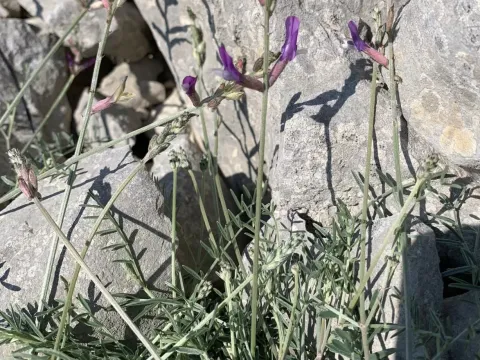
Astragalus muelleri
Astragalus muelleri
Astragalus muelleri is a perennial herbaceous plant belonging to the diverse Fabaceae family. This species is widely recognized for its resilience and adaptability to semi-arid environments, where it develops a significant root system to survive in nutrient-poor and moisture-stressed soils.
What the section contains
Astragalus muelleri
The sowing process for Astragalus muelleri is best scheduled for early spring, allowing the seeds to take advantage of remaining winter moisture. Precision drilling at shallow depths ensures optimal germination rates, as the seeds require sufficient soil-to-seed contact and consistent temperatures to break dormancy and establish vigorous seedlings.
Regarding soil requirements, Astragalus muelleri thrives in well-drained, sandy loam, or rocky soils. It is highly sensitive to waterlogged conditions, which can lead to rapid root degradation. Therefore, site selection should prioritize areas with excellent natural drainage and a pH level that leans towards neutral or slightly alkaline conditions.
This crop is highly efficient in terms of climatic requirements, showing strong tolerance to heat and drought. Exposure to direct sunlight is essential for the plant's physiological processes. It is generally unsuitable for low-lying, shaded areas where competition for resources and moisture accumulation would hinder its growth cycle.
Agricultural management for this species is relatively low-input once established. Key practices include site preparation through deep tillage to loosen the soil profile and ensure that the plants can access mineral nutrients. Weed control during the establishment phase is critical, as the crop's slow early growth makes it susceptible to invasive plant competition.
The primary agricultural utility of Astragalus muelleri lies in its role as a high-quality forage crop. It serves as an excellent source of dietary protein for livestock, particularly in arid regions where traditional legume cultivation is difficult. The plant retains nutritional value when harvested at the appropriate vegetative stage.
The main threats to Astragalus muelleri cultivation involve soil-borne pathogens, such as fungal root rots, typically exacerbated by poor field drainage. Integrated pest management practices, including proper crop rotation and the use of healthy, treated seeds, are recommended to maintain plant health and prevent the spread of common agricultural pests.