
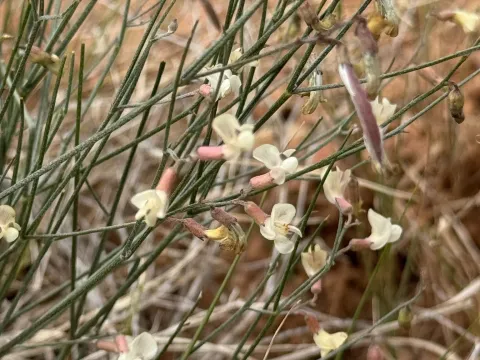
Astragalus junceus
Astragalus junceus
Astragalus junceus is a perennial legume species valued for its high durability and adaptability to harsh environmental conditions. It is widely recognized for its ability to stabilize poor soils.
What the section contains
Astragalus junceus
The optimal planting season is early spring, which allows the seedlings to establish a deep root system before the onset of summer drought, ensuring better survival and growth rates.
Seeds should be planted at a depth of 1 to 2 centimeters. Because of the hard seed coat, scarification is a crucial step to break dormancy and ensure high and uniform germination in the field.
Row planting is recommended for better weed management during the establishment phase. Proper soil preparation, including leveling and firming the seedbed, is vital for successful seedling emergence.
Seeding rates typically range from 8 to 12 kilograms per hectare depending on the purpose of the crop. Once established, the stand can persist for many years with minimal maintenance.
This species thrives in areas with high solar radiation and is exceptionally well-adapted to well-drained, sandy, or light loam soils. It is highly resistant to drought and heat stress.
Astragalus junceus prefers neutral to slightly alkaline soil conditions. It does not tolerate waterlogged conditions or high water tables, which can cause root rot and rapid plant decline.
Due to its deep root system, it is an excellent choice for reclamation projects, particularly on degraded or sandy soils prone to wind erosion, as it fixes nitrogen and stabilizes the substrate.
The plant is highly winter-hardy, capable of surviving in regions with extreme winter temperatures, which makes it a reliable forage source in semi-arid and northern climates.
No special fertilizer requirements are usually needed once the plant is established, as its ability to fix nitrogen improves the overall nutrient status of the surrounding soil.
The forage yield depends heavily on site conditions and moisture availability. On average, it provides one to two moderate cuttings per season, providing high-quality protein-rich biomass.
While not as productive as some intensive forage crops, its ability to produce consistent biomass in marginal lands where other crops fail makes it highly valuable for sustainable livestock farming.
Seed production is stable and can be a secondary revenue stream for farmers. Harvesting seeds at the right maturity stage is critical to prevent shattering losses in the field.
Intercropping or planting as part of a permanent pasture mixture can help stabilize production levels and ensure a balanced diet for livestock grazing during the late summer period.
With proper management, the longevity of an Astragalus junceus stand can exceed a decade, reducing the long-term costs of soil tillage and re-seeding operations for the farmer.
Common pests include weevils that target the seed pods and aphids that can cause leaf curling and reduce vigor during the early stages of plant growth in the spring.
Fungal diseases, such as leaf spot, may occur during seasons with prolonged wet weather. Ensuring good airflow in the field is the best cultural practice to mitigate these risks.
Managing weed competition during the first year is the most important protection strategy. Once the canopy closes, the plant is usually capable of suppressing most competing weed species.
Integrated pest management should focus on monitoring insect populations during the flowering stage, as this is when the crop is most vulnerable to economic damage from pests.
Rotating crops after a long cycle of production helps to break the life cycle of soil-borne pathogens and rejuvenates the land for future agricultural activities.
For high-quality hay, harvesting should occur during the full bloom stage. This timing ensures the best balance between biomass quantity and the nutritional content of the forage.
When harvesting for forage, a clean, low cut should be performed. This stimulates the plant to regrow from the crown, allowing for potential secondary growth later in the season.
When harvesting seeds, combine harvesters must be adjusted to a lower drum speed to avoid damaging the seeds, and harvesting should take place when the pods have turned dark brown.
The hay should be dried quickly to retain its green color and nutritional value, minimizing the loss of leaves during handling and baling processes common in hay production.
Post-harvest residues can be used for soil incorporation or light grazing, contributing to the overall carbon sequestration efforts on the farm while maintaining soil health.