
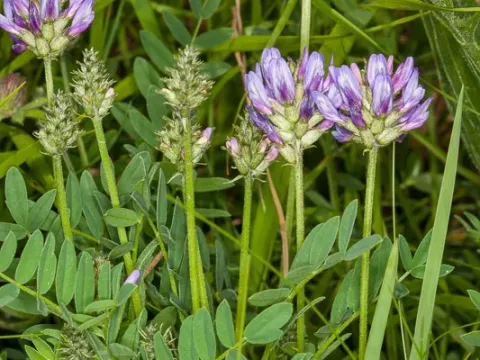
Astragalus leontinus
Astragalus leontinus
Astragalus leontinus is a perennial herbaceous plant belonging to the Fabaceae family. It is natively distributed in the high-altitude regions of Europe, specifically within the Alps, where it thrives in rocky, calcareous terrain.
What the section contains
Astragalus leontinus
Botanically, the species is distinguished by its low-growing habit and specialized root system designed for harsh alpine conditions. It features hairy foliage that serves as a protective layer against intense sunlight and moisture loss.
The crop requires well-drained, nutrient-poor, or stony soils to flourish. It is highly sensitive to soil compaction and waterlogging, making proper site selection essential for sustainable growth.
It prefers climates with cool summers and significant diurnal temperature fluctuations. The plant is valued in ecological agriculture for its nitrogen-fixing capabilities, which improve soil health in high-elevation grasslands.
In terms of agricultural utility, it is primarily used for the stabilization of mountain soils and as an essential legume component for restoring degraded alpine meadows or slopes.
The plant is susceptible to various fungal pathogens when cultivated in environments with poor ventilation or high humidity, often manifesting as root rot or leaf spot diseases.
Insect pests such as weevils represent a significant threat to the plant's reproductive success, as they frequently target the developing seeds and pods.
Preventative measures include maintaining proper plant spacing and ensuring that the soil drainage is sufficient to prevent the accumulation of surface water.
In cases of heavy infestation, integrated pest management practices should be employed, focusing on biological controls that are safe for the alpine ecosystem.
Regular inspections during the active growth phase are critical to identify symptoms of infection early, ensuring that the health of the entire crop population is maintained.