
Astragalus miser
Astragalus miser
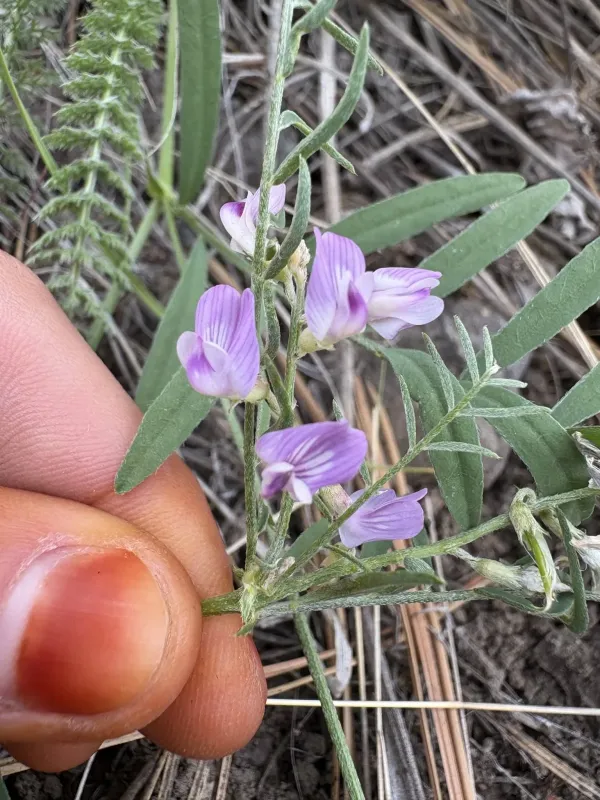
Description
Sowing dates
Astragalus miser, commonly known as timber milkvetch, is a perennial legume within the Fabaceae family. It is widely recognized for its adaptation to mountainous terrains and varied soil types across North America.
The sowing process requires attention to seed dormancy, as the seeds have a hard coat. Scarification is highly recommended prior to planting to ensure high germination rates in the field.
Seeding should occur early in the spring, allowing the plants to establish before the onset of summer heat. Shallow depth, approximately 1–2 cm, is crucial to prevent burial of small seeds, which would inhibit emergence.
During the establishment phase, the plant grows slowly, prioritizing root development over top biomass. Farmers often use a row-seeding pattern to allow for mechanical weeding between rows.
The selection of an appropriate site is vital, as this species does not compete well with vigorous weeds in the first year. Soil preparation should include clearing and leveling to support the initial growth cycle.
Growing requirements
Astragalus miser thrives in well-drained, porous soils. It is particularly known for its ability to grow on thin, rocky, or nutrient-poor soils where other legumes might struggle.
The species prefers neutral to slightly alkaline pH levels. It exhibits remarkable drought tolerance once established, making it suitable for areas with erratic precipitation patterns.
Sunlight is a key requirement for healthy growth. The plant fails to perform well under dense shade, which emphasizes the importance of open-field cultivation or sparse grazing systems.
While the plant relies on nitrogen fixation via symbiosis, supplemental phosphorus may be required to boost yield and seed production on extremely poor soils.
Temperature tolerance is a hallmark of this species, allowing it to withstand severe cold and high-altitude weather conditions. Its root system is exceptionally hardy, surviving deep frost cycles.
Main diseases and pests
The primary concern regarding Astragalus miser is its toxicity to livestock. It contains aliphatic nitro compounds, which can cause severe neurological damage or death in cattle, sheep, and horses.
Due to these toxins, the plant is often considered an undesirable weed in pasture management. Grazing must be carefully managed to prevent animals from consuming large quantities of this legume.
Regarding plant health, the species is susceptible to root rot if soils are chronically waterlogged. Improving drainage is the most effective management strategy to mitigate fungal pathogens.
Insect pests are generally deterred by the plant's natural toxicity, though specific weevils may target the seed pods. Monitoring during the flowering stage is advised for seed production fields.
Control of Astragalus miser in productive pastures often involves mechanical removal or spot-spraying with selective herbicides. Eradication is difficult due to the longevity of the soil seed bank.