
Astragalus microcephalus
Astragalus microcephalus
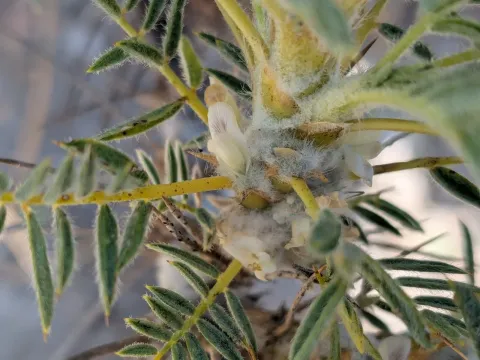
Astragalus microcephalus is a perennial herbaceous plant belonging to the Fabaceae (legume) family. It typically grows as a low, dense shrub, displaying adaptations such as dense trichomes (hairs) to minimize water loss in arid environments.
What the section contains
Astragalus microcephalus
The plant originates from the mountainous regions of Western Asia, specifically Turkey and Iran. It is naturally found on stony slopes and steppe plateaus, demonstrating high tolerance to extreme temperature fluctuations and drought.
This species requires well-drained soils, ideally sandy loam or rocky substrates with a neutral or slightly alkaline pH. Waterlogging is detrimental to the plant, as it causes rapid decay of the taproot system, which is essential for its survival in dry climates.
The biological structure of Astragalus microcephalus features a deep taproot, allowing the plant to tap into deep soil moisture reserves. This physiological trait makes it a highly resilient species in regions where other forage plants might fail.
As a legume, it contributes significantly to soil health by fixing atmospheric nitrogen through a symbiotic relationship with soil bacteria. This makes it a valuable plant for soil restoration projects and erosion control in arid areas.
The primary economic value of Astragalus microcephalus lies in its production of tragacanth gum, a natural exudate collected from the stems. This gum is highly valued as a stabilizer, thickener, and emulsifier in the food, pharmaceutical, and cosmetic industries.
In addition to industrial use, the plant serves as a supplementary forage resource for small ruminants like sheep and goats in its native range. While it contains thorns, the young foliage provides necessary nutrition during the dry summer seasons.
The yield of biomass is highly dependent on environmental factors, typically ranging between 1.5 and 3 tons of dry matter per hectare under controlled cultivation. Success in yield relies heavily on site selection and minimizing competition from invasive weeds.
The collection of tragacanth is a traditional process involving strategic wounding of the stems to induce gum secretion. Modern agricultural practices aim to refine this process to increase yield efficiency while ensuring the long-term health of the plant population.
Further research is being conducted to select varieties with reduced thorniness and higher alkaloid content, making the species more versatile for both pastoralists and industrial users. Consistent yields require careful management of soil moisture levels.
Astragalus microcephalus is naturally resistant to many pests, but it remains susceptible to root pathogens if the soil structure is not well-drained. Over-irrigation or high humidity often leads to root rot, which is the most significant threat to plant longevity.
Insect pests such as nodule weevils can damage the root system, reducing the plant's nitrogen-fixing capabilities and overall vigor. During the flowering stage, aphids can cluster on the stems, potentially affecting the quality of the secreted gum.
Integrated Pest Management (IPM) strategies are recommended to maintain plant health. This includes monitoring for insect populations and ensuring that the field environment does not foster conditions conducive to fungal growth or insect outbreaks.
Weed management is critical during the establishment phase, as young plants compete poorly with aggressive local grasses. Keeping the field clean of invasive species helps in maintaining the health and productivity of the Astragalus crop.
Regular phytosanitary monitoring ensures that diseases are identified early. By maintaining appropriate planting density and avoiding soil compaction, farmers can prevent the spread of diseases and maintain a robust and sustainable crop stand.