
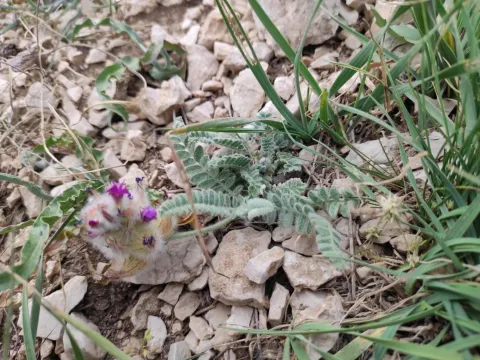
Astragalus lineatus
Astragalus lineatus
Astragalus lineatus is a perennial herbaceous plant belonging to the Fabaceae family. It is a robust species naturally adapted to dry, stony, and arid environments.
What the section contains
Astragalus lineatus
The plant thrives in well-drained, calcareous soils. It is particularly valued for its ability to grow in low-fertility soils where more demanding forage crops fail.
Light requirements are high, as the species is intolerant to shading. It requires open areas with full exposure to sunlight to reach its full physiological potential.
The root system of Astragalus lineatus is deep and extensive, which allows it to access subsoil moisture during extended droughts, ensuring survival in harsh climates.
Temperature tolerance is a hallmark of this species, as it is adapted to survive cold winters and high summer heat without significant damage to its vegetative parts.
Sowing should take place in early spring to take advantage of the moisture accumulated in the soil during the winter season, facilitating early germination.
Seeds of this species often exhibit hard-seed coat dormancy. Mechanical scarification is recommended before planting to ensure uniform and rapid emergence.
The optimal seeding depth is shallow, ranging from 1 to 2 centimeters. Proper seed-to-soil contact is essential for successfully establishing a healthy stand.
Row spacing should be managed based on the final usage. Wider rows are preferred for seed production, while closer rows are ideal for forage production systems.
Compaction of the soil after sowing is a critical agronomic step to prevent the topsoil from drying out and to protect the germinating seeds from external damage.
The biomass yield of Astragalus lineatus is moderate but highly stable across years with variable precipitation. It is a long-lived plant that can persist for many seasons.
Nutritional value is relatively high for a legume species adapted to arid zones. It provides a good source of protein for livestock, particularly in late summer.
Forage productivity peaks during the second and third years of establishment. Proper management of the regrowth period is necessary to maximize total seasonal yield.
Economic utility includes its use in reclamation projects and as a supplemental forage crop in regions unsuitable for more traditional nitrogen-fixing legumes.
Sustainable harvesting practices ensure the longevity of the plant stand, allowing for decades of service in pastures where soil protection and fodder are priorities.
Root rot is the primary threat to Astragalus lineatus, usually occurring when the plant is grown in soil with poor drainage and excessive moisture accumulation.
Foliar diseases, such as powdery mildew, may affect the plant during periods of high humidity. This can reduce the photosynthetic efficiency and biomass output.
Insects like the clover root curculio can cause significant damage to young seedlings, necessitating careful monitoring during the early stages of plant development.
Prevention involves selecting appropriate sites and avoiding monocultures in regions where these pests are highly endemic, coupled with regular field scouting.
- Proper site selection and drainage.
- Monitoring for insect pressure during spring.
- Implementing diversified cropping rotations.
Harvesting for hay should occur at the onset of flowering. This stage provides the best nutritional profile, balancing protein content with fiber digestibility.
Mechanical harvesting requires sharp blades and a high setting to prevent damage to the crown of the plant, which is vital for the next season's growth.
Seed harvesting is conducted when the pods turn brown. Due to the risk of shattering, the timing must be precise to capture the seed before natural dispersal.
Post-harvest handling involves rapid drying to reach safe storage moisture levels, preventing fungal contamination of the high-protein seeds.
Storage should occur in cool, dry conditions to preserve germination vigor for subsequent planting cycles, ensuring the long-term success of the crop.